Jump to content on:
Alcohol and drinking
Most young adults will come across alcohol, whether they choose to try it or not. This page includes information about alcohol, as well as tips for being safer and spotting the signs of an unhealthy relationship with alcohol.
Find information and advice for if a parent or carer is drinking too much alcohol.
Watch this film to hear young people talking about their experiences with alcohol:
Why do people drink alcohol?
People drink alcohol for lots of different reasons, including because they:
- are celebrating something, or because it’s part of how their culture traditionally celebrates
- think it helps them to feel more relaxed
- find it easier to talk to people in social situations if they’ve had an alcoholic drink
- enjoy feeling drunk or think they have more fun when they’re drunk
- are trying to cope with difficult situations, thoughts, or feelings
- want to forget something that’s happened, or how they feel
- like the taste of alcoholic drinks
- want to fit in with other people who are drinking
How can alcohol affect mental health?
Most people know that alcohol can have a big impact on their physical health (for example, that drinking alcohol can cause cancer or liver disease), but the effects on mental health are talked about less.
Alcohol can affect people’s everyday mental health (including if they don’t have a mental health condition) and it can also make the symptoms of existing mental health conditions worse.
Alcohol and being impulsive
Alcohol can stop us from thinking things through.
In our everyday life, we think about things before we do them. It’s almost like there’s a brake applied to your brain, so you don’t act until you’ve considered the consequences.
When you take alcohol on board, it takes off this brake (by stimulating GABA receptors in your brain, if you’re interested in the science).
As a result, you become more impulsive and you might do things that your sober self would decide against, whether it’s trying to jump over something high, or saying something to a friend (or stranger) that you’d usually keep private.
The effects of being impulsive are often made even worse by the other effects of alcohol. It can affect your balance (so you’re less physically able than usual), speech (so it might be difficult for others to understand you), and emotions (so you might have heightened emotional reactions).
Sometimes, people who are struggling with their mental health use unhealthy ways of coping, like self-harm, for example.
If they drink alcohol, they might be less able to think things through and use healthier ways of coping, or they might end up unintentionally causing themselves serious harm because they haven’t been able to understand the consequences of their actions.
Alcohol and anxiety
Some people find that drinking alcohol makes them more anxious in the moment, for example, if they’re really aware of how their body feels different or if they find they feel a lot of intense emotions when they’re tipsy or drunk.
Other people find alcohol temporarily reduces their anxiety. Alcohol ‘depresses’ or slows down activity in your brain, which can make you feel sleepier and more relaxed. Some people find this makes them less tense or anxious, and therefore they feel ‘better’ – but this is only ever a short-term relief. In the long-term, drinking alcohol will make you more anxious.
Part of this is because, biologically, you’ve suppressed the anxiety. When it returns it feels worse because your brain is trying to restore a normal balance of chemicals.
People are often tired after drinking too – because they haven’t spent as long asleep, and also because their sleep has been disturbed.
Because alcohol makes people act more impulsively, without thinking things through, you might also have valid worries about things you’ve done, said, or lost the night before – especially if you have memory gaps, or you’re not sure of the details.
Alcohol and memory
When you’re intoxicated (drunk), you’re less likely to form memories. It isn’t just that you don’t remember things the next day – alcohol means that you don’t process information in the same way, and so you don’t make memories in the first place.
This can cause a lot of anxiety the next morning, or throughout the next few days as you find things out from other people.
Alcohol can also make people more vulnerable to the actions of other people. While it is never your fault if someone else hurts you while you’re drunk, it can cause anxiety if you can’t remember the details of situations or don’t feel sure about what happened while you were drunk.
Can you drink alcohol while taking mental health medication?
If you’re taking medication for your mental health, you should always ask the person who prescribed the medication about whether you can drink alcohol while you’re taking it.
If you’re not sure whether it’s safe to drink alcohol while taking your medication, you should drink non-alcoholic drinks until you can find out from the person who prescribed your medication (or someone else from the same GP surgery or mental health team).
Mental health medications affect how your brain functions, to help improve (or remove) the symptoms of mental health conditions – but alcohol also affects how your brain functions. If you mix alcohol and medication, they can clash.
Depending on the medication, this might mean alcohol ‘neutralises’ the effect of the medication, so it doesn’t work and you won’t get the benefits.
With other medications, alcohol can ‘work with’ the medication and make the effects stronger – which can be dangerous and cause side effects.
We also know that some medications can interact with alcohol to cause specific side effects, including changes in blood pressure.
Can mixing alcohol with medication affect your liver?
Drinking alcohol while taking medication can also affect your liver.
One of the things your liver does involves filtering alcohol out of your body – but a lot of medication is also filtered out of our bodies through the liver.
If you drink alcohol while taking those medications, the alcohol and medication are forced to ‘compete’. If your liver can’t cope with this, you can end up with unhealthy (or even toxic) concentrations of alcohol or medication in your body.
Long-term, putting pressure on your liver like this can cause damage that can be permanent.
What’s the law in the UK about drinking alchohol?
There are several UK laws about alcohol, including ones that say how old you have to be to drink, as well as laws around driving after drinking alcohol and drinking alcohol in public.
It’s important to know what the law says, because you could get in trouble for breaking the law, for example, if you’re under 18 and drinking alcohol in public, or if you’re drinking alcohol somewhere it’s been banned (no matter how old you are).
Find out more about the laws around alcohol (including for young people) on the Drinkaware website.
Drinkaware - alcohol and the law
What if I don't want to drink alcohol?
It’s always OK to choose not to drink alcohol. People might not want to drink alcohol for a range of reasons, including:
- religious or cultural reasons
- their mental or physical health
- not liking how alcohol makes them feel
- not liking how alcoholic drinks taste
- the cost
Some people enjoy going to environments that traditionally involve alcohol (like house parties, pubs, bars, and clubs) even if they’re not drinking, while other people feel uncomfortable in those sorts of situations. It’s up to you how you spend your free time!
If you choose not to drink alcohol, good friends will accept this and make sure you’re included anyway.
This might mean finding places to hang out that aren’t centred around alcohol, planning alcohol-free activities to do together, or choosing bars or pubs that serve a good range of non-alcoholic drinks (if you’re comfortable in those spaces).
If you’re at college or university, there are likely to be clubs and societies you can join based on your interests. These can be a really good way to meet people if you don’t want to go out drinking.
People leading societies, clubs, and workplaces should do their best to make sure social activities are inclusive so people who don’t drink alcohol can still take part and have fun.
How to drink alcohol more safely
If you’re aged 18 or over and choose to drink alcohol, it’s important to understand the risks surrounding it – and what you can do to reduce the risk.
You’ll hear people talking about ‘low-risk’ and ‘reducing risk’, because there’s no completely safe drinking level.
But if you choose to drink alcohol, you do have the power to make choices and plans to reduce your risk of short- and long-term negative effects, while still enjoying your life!
Learn about units
Units of alcohol are a way of measuring how much actual alcohol someone is drinking. Drinks contain different amounts of alcohol – the same volume of beer, wine, and a spirit like vodka will contain different amounts of alcohol, as they all have a different percentage of alcohol in them. Units also help us keep track of how much alcohol we’re drinking if we drink from different sizes of glass, bottle, or can.
Units are how the UK government gives guidelines, because units apply to everyone, whatever type of alcohol they’re drinking.
The NHS website has a helpful guide on alcohol units, as well as information about how to work out the units in a drink from the information on the bottle.
It can be helpful to think about units if you’re drinking in different situations, for example, at parties where people might be drinking stronger drinks or mixing drinks themselves without measuring the alcohol.
Understand the guidelines
The UK government has guidelines for people of all genders about limits, spreading drinking out, and having alcohol-free days.
While there are long-term risks of regularly drinking more than in the guidelines, it’s also important to think about single occasions of drinking alcohol too.
If you drink too much or too quickly, you’re exposing yourself to more risks. Some of these risks can seem lower stakes (like a hangover or feeling anxious the next day), but others are serious – for example, losing control (or not thinking things through) and getting involved in violence, damaging your relationships, or being involved in accidents (which can cause serious injuries and even death).
Plan your drinking
If you’re trying to stick to the low-risk drinking guidelines, it might be helpful to think in advance about how many times you might want to drink during the week – and how much you’re going to drink each time. It’s best to do this while you’re sober, as once you start drinking, you’ll be less able to think things through.
If you’re going out three times, for example, you could think about how you’ll split your units over the week and how many drinks you’ll therefore drink each time.
Equally, if you know you’ve got several stressful days (or a few different celebrations) coming up, can you think of ways to relax and unwind without drinking alcohol?
Don’t forget that having several drink-free days a week is a good way to cut down your alcohol consumption.
Check in with yourself before you drink
If you’re planning to drink, it’s a good idea to check in with yourself and how you’re feeling.
If you’re feeling sad, low, anxious, or angry, for example, then there’s a real risk that alcohol may make those feelings worse, so you might be more likely to enjoy your plans if you don’t drink. If you drink while you’re struggling, you might also end up making decisions you regret because alcohol affects your ability to think things through.
Explore low-alcohol and alcohol-free drink options
Nowadays, we have more drink options that ever before. If you swap some (or all) of your alcoholic drinks for low- or no-alcohol options, you’ll drink less overall.
You can find all sorts of low-alcohol drinks, including beers, ciders, and spirits. The Drinkaware website has more information about alcohol-free drinks, including the difference between low- and no-alcohol options – this page also includes information about calories, which some people might want to avoid.
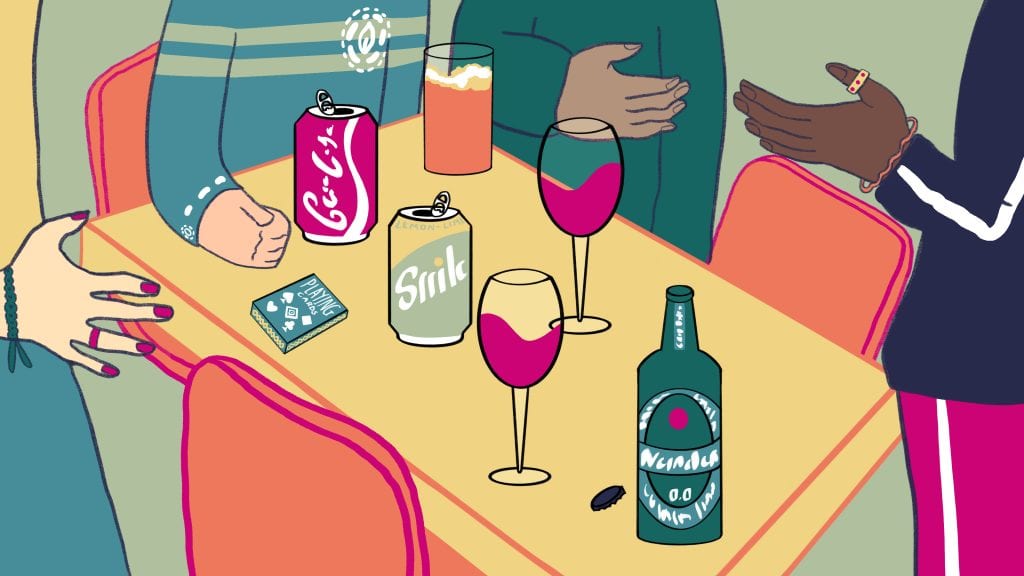
You could also explore drinks that are always alcohol-free, like mocktails or other soft drinks. Some people might stick to these alcohol-free drinks all night, whereas others might have a mocktail or soft drink between every alcoholic drink. This is a great way to pace yourself and avoid drinking too much too fast – and it can also help you stay hydrated.
You can also think about other ways to drink less alcohol, in addition to buying fewer drinks. If you drink spirits, for example, it obviously makes a difference to order a single instead of a double. With other drinks, you could opt for a smaller serving (like a half-pint of beer or a small glass of wine) or choose an option with a lower alcohol percentage.
Consider using an app to keep track of your drinking
Apps can be a really helpful way to track how much alcohol you’re drinking on a night out, or to keep track of the alcohol-free days you have during a week.
Lots of the apps designed to help people track their alcohol intake also track calories, and you can’t always turn this feature off. Some people might find this helpful when thinking about their drinking, while others might find it triggers unhealthy thoughts or behaviours.
Apps can make it easier to track your alcohol consumption (and they often have other helpful features) – but you can also use a note on your phone, or even pen and paper, if you find apps that mention calories aren’t good for your overall wellbeing.

My Drinkaware
Designed to help you drink less and change your drinking habits, whether you’re looking to cut down on drinking or stop completely.
NHS Drink Free Days
Encourages you to choose days to go drink-free and provides practical support.

Try Dry
Designed to help people who are looking to cut down their drinking or stop drinking
Find other spaces to socialise
Some people can have a great time in a club or bar without drinking any alcohol, whereas others find these sorts of spaces challenging if they’re trying to stay sober.
Depending on where you live, there will be different options for socialising in the evening – many bigger cities have late night dessert places or cafes, or you could head somewhere that involves an activity like bowling or an escape room.
Eat before you go out
You might have heard that eating a meal before drinking (especially one with carbohydrates like pasta, rice, or potatoes) will ‘line your stomach’.
There’s some logic behind this – if you eat before you drink, the alcohol will move through your body (and thus be absorbed) more slowly, and there’s some suggestion it can help your body get rid of alcohol too.
This means it’s a good idea to make sure you’ve eaten enough throughout the day before you start drinking alcohol.
Remember, though, that eating enough or ‘lining your stomach’ doesn’t mean it’s any less risky to drink beyond the government guidelines.
Ask your friends to help you as you help them
One of the best ways to reduce the short-term risks associated with drinking alcohol is to make sure you’re drinking around people you can trust.
If you decide to set yourself limits (around how much you drink or spend, or what time you’ll head home, for example), you can ask your friends to support you. It’s ultimately your responsibility to stick to your plan, but communicating in advance means your friends can be aware. This means they can avoid being accidentally unhelpful (for example, by suggesting you have another drink or buying everyone extra drinks) and gently remind you of your commitment. What do you from there is up to you.
Making sure you’re with trustworthy friends also means that you can count on the people around you if things do go wrong – for example, if you drink too much (or are a victim of a crime like spiking), or if there’s an issue with your transport home.
Having friends around you can be especially important if you know that alcohol can affect your mental health, or if it would be helpful to have your friends’ support to spot any ‘early warning signs’ of symptoms of your mental health condition.
Plan your way home
Regardless of how much you’re planning to drink, if you’re going out in the evening or at night, it’s always sensible to plan how you’ll get home.
What this looks like will depend on where you live, but it might include things like making sure your phone is charged, knowing your public transport options (and whether you need a back-up plan in case you miss the last bus or train or there are unexpected cancellations), or finding out if you need to pre-book a taxi.
It’s also a sensible idea to talk to the people you’re going out with. How will you make sure everyone sticks together, and gets home safely at the end of the night? Do you have a back-up plan?
Coping with hangover anxiety
It’s a well-known fact that drinking alcohol can lead people to feel anxious the next day – that’s where the terms ‘hangxiety’ and ‘beer fear’ come from.
Find more about feeling anxious, and anxiety disorders.
You might be feeling extra anxious after you’ve been drinking alcohol because of the biological effects, or because you’re worrying about something that happened (or something that might have happened) while you were drunk.
There’s no instant fix for hangover anxiety, but there are things you can try to help.
Don't drink any more alcohol
It can be tempting to drink more if you’re hungover and feeling anxious, but it will just delay (and increase) the negative effects. You’ll have to face the hangover and anxiety eventually, and it’ll be worse if you keep drinking – not to mention the negative side effects of regular, heavy drinking.
Take care of your hangover
There’s no cure for a hangover, despite the myths about quick fixes! Time is the ultimate hangover remedy, but trying to reduce some of the physical symptoms of a hangover puts you in a better place to manage any anxiety or regret. Find more information on recovering from a hangover on the drinkaware website.
Distract yourself
Keeping yourself busy can be helpful as it reduces the time you spend thinking about things over and over again and makes it less likely that your thoughts will spiral. You could try an activity from the five ways to wellbeing or check out our tips for when self-care feels difficult – though it’s best to avoid intense exercise if you’re feeling unwell or dehydrated.
Talk to someone
Some people find it helpful to talk to a friend who was there and can fill in any memory gaps – but you could also spend time with them and trust that the fact that they still want to hang out shows that you haven’t done anything terrible. There are also plenty of helplines, text lines, and online chats you can contact if you need to talk.
Text NATTER for help
Anyone can text ‘NATTER’ to 85258 to seek
help, wherever they are in the UK. It’s a free, anonymous service and available 24/7.
More about NATTER
Signs your drinking or alcohol use might be a problem
People use lots of different words and phrases to talk about unhealthy relationships with alcohol and patterns of drinking. You might hear people talking about harmful or unhealthy drinking, drinking that increases your risk, alcohol dependence, alcohol addiction, or being an alcoholic.
It’s important to remember that there is no ‘risk free’ way of drinking alcohol. You’ll usually see people talking about ‘lower risk’ drinking, to recognise that drinking alcohol always carries some risk.
There’s not one ‘official’ list of signs and symptoms of an unhealthy relationship with alcohol, or alcohol dependence.
Drinking more (or more often) than the limits in the government’s guidelines for lower-risk drinking can be one sign that someone’s drinking might be unhealthy or a problem, but having a difficult or unhelpful relationship with alcohol can be about more than just the amount you’re drinking.
What are the signs I might be drinking too much?
As well as drinking more (or more often) than the recommended limits, other signs that you might be drinking more than is healthy can include if you:
- often have a strong or overwhelming desire to drink alcohol
- get into trouble for your drinking
- have physical or mental health problems because of your drinking
- feel guilty, bad, or worried about your drinking
- can’t remember what happened after a night (or day) where you were drinking alcohol
- find you have to drink more and more alcohol to feel the same effect
- find it difficult to socialise without drinking alcohol, including in situations where other people are not drinking alcohol
- find you need to drink alcohol in the morning to cope (or manage a hangover)
- prioritise drinking alcohol over other things you want or need to do, like spending time with friends
- don’t manage to do things you need to do because of drinking or hangovers, like going to lectures or work
- lie to other people (including friends and family members) about how much or how often you’re drinking
- are told by friends or family members that they’re concerned about your drinking
- have not been able to reduce how much or how often you drink when you’ve tried to
- are told by friends or family members that your personality changes when you’ve been drinking alcohol, for example, if you become angry or aggressive
You do not need to have experienced all of these things for your alcohol use to be a problem. Experiencing even one or two things on the list might be a sign your relationship with alcohol is unhealthy.
The Drinkaware website has a confidential, interactive tool to help people aged 18 and over to check their drinking. You answer up to 10 questions about your drinking and it tells you more about your level of risk.
Alcohol withdrawal
If you notice any symptoms appear when you stop or reduce the amount of alcohol that you consume, you should seek medical advice. Withdrawing from alcohol can be dangerous.
If someone who regularly drinks a lot of alcohol suddenly drinks a lot less alcohol (or stops drinking alcohol entirely), they might feel unwell and experience withdrawal symptoms.
If you drink alcohol regularly, it is best to get medical advice before stopping drinking alcohol completely.
What are the symptoms of alcohol withdrawal?
The symptoms of alcohol withdrawal can vary. They can be milder or serious. In some cases, they can even be life-threatening.
If you have physical withdrawal symptoms, you must get medical advice before you stop drinking. It may be dangerous for you to stop drinking too quickly, or without the right support.
Withdrawal symptoms can include:
- shaking or having tremors (like your hands shaking)
- sweating
- your heart beating really fast
- feeling sick or being sick
- headaches
- losing your appetite
- feeling low or experiencing depression
- feeling anxious
- being irritable
- being restless
- finding it hard to sleep
- being really disorientated
- breathing problems
- having seizures
- experiencing hallucinations
What help can you get if you're worried about how much you're drinking?
The treatment you can get for misusing alcohol depends on things like how much alcohol you’re drinking and how old you are.
Most people can access some kind of mentoring, counselling, or talking therapy (for example, cognitive behavioural therapy or family therapy) to help them safely reduce how much alcohol they’re drinking and find other, healthier ways to cope with life.
Some people may also find it helpful to go to groups like Alcoholics Anonymous (AA) or SMART Recovery.
Some adults may be prescribed medication to help reduce any withdrawal symptoms when they reduce how much alcohol they’re drinking (or stop drinking altogether), or medication to reduce the urges they have to drink.
You can find out more about treatment for alcohol misuse (including details about medication) on the NHS website.
Where to get help for your drinking or alcohol use
Emergency?
If anyone is in immediate danger, call 999 now.
If you need urgent help for mental or physical health, call NHS 111 or get help from NHS 111 online.
If you think you may have an alcohol problem (or are accessing support but are struggling to manage), you should make an appointment with your GP (or the service supporting you, if you’re already accessing care).
You could ask an adult you trust to help you make the appointment or to go with you, if you would find that helpful.
If you are aged under 18 and tell a doctor that you’ve been drinking alcohol, they won’t tell the police. They are there to help you, not to get you into trouble.
There are also lots of helplines and support available to anyone struggling with alcohol.
Find support
Find trusted services that can support you when things feel overwhelming.

Text NATTER for help
Anyone can text ‘NATTER’ to 85258 to seek
help, wherever they are in the UK. It’s a free, anonymous service and available 24/7.
More about NATTER
What to do if you're worried about a friend’s drinking or alcohol use
If you’re worried about a parent or carer’s alcohol or drug use, we have a page full of information and links to support.
If you’re worried about a friend’s drinking, there are a few things to think about as you support them and look after yourself.
Approach the subject with sensitivity
It can be difficult to find the right words to start conversations about alcohol. If you’re worried about someone’s drinking, it’s understandable to want to help (and to keep them safe) – but you might be worried about upsetting them or ruining your friendship.
There’s no perfect way to start a conversation around drinking, but there are some things that might help.
First, remember that your friend might view their alcohol use differently to you. Just because you see their as drinking is unsafe or unhealthy, it does not mean they will agree.
Understanding that you might start the conversation with different points of view can help you communicate more effectively.
‘Anyone who has an unhelpful relationship with alcohol or other substances will be on their own path. They will have a varying degree of knowledge, understanding, insight or acceptance of whether they have a problematic relationship with alcohol or not.’
Dr Johan Redelinghuys
Lots of people find it helpful to notice things and gently point out facts without any judgement.
For example, if a friend is drinking when no one else is, you could just say something like ‘I don’t think we’re drinking now’. Comments like this can sometimes help people to get another perspective on their situation.
Of course, in some situations, you might want to be more direct. For example, if someone’s ended up in A&E after drinking, you might want to point out any patterns in their alcohol use, tell them about their concerns, and suggest you work together on how you can have a fun night out without them putting themselves at risk.
Avoiding judging your friend or showing that you’re angry can make it easier for people to engage in a conversation with you – but even if you do everything perfectly, they might not be ready or able to talk about things with you.
This is OK, and it is never your ‘job’ or responsibility to ‘make’ someone take accountability or get support. Even if you don’t have a helpful conversation with them, pointing out what you’ve noticed can still be helpful for them in the long-term.
Know where your responsibility ends
As a friend, you are not (and cannot be) responsible for someone else’s wellbeing, no matter how much you care about them. Your responsibility is only ever to be a good friend – not to ‘treat’ your friend’s alcohol problem or to persuade them to get professional support.
What being a good friend looks like can differ depending on your specific friendship and the situation you are in, but it can be as simple as being there and helping people stay safe if they’re in difficulty (for example, by getting them home or to hospital if they’re unwell), or making sure you’re spending time in alcohol-free spaces or spaces with good non-alcoholic drink options.
As a friend, you can’t be responsible for your friend’s recovery. You can tell them about local organisations (and national helplines), but you can’t force them to get support, or to make changes even when they are accessing support.
If you start noticing things are unsafe, it might be that you have to talk to other people too. Depending on how well you know someone, it might be that you talk to their parents or carers, or that you tell a youth worker or teacher about your concerns so they can also help your friend (and you).
‘For example, you can’t have a friend be intoxicated and drive. There are other responsibilities and it’s a much bigger burden – there’s an old saying, “friends don’t let friends drive drunk”, and that’s true. You may have to get other people involved – it would be much worse for your friend if they cause someone else harm.’
Dr Johan Redelinghuys
Set some boundaries
Setting boundaries means deciding on what your limits are and what you are and aren’t comfortable with doing.
Setting boundaries with a friend who has a tricky relationship with alcohol can be as simple as telling them what you will (and won’t) do while you’re spending time together. For example, it’s OK to set limits like agreeing to an activity (like going to the cinema or going to a gig) while setting the boundary that you won’t get drunk with someone.
It can also look like choosing not to do certain activities with someone to look after yourself (and your friendship). For example, if you know they’re going to a bar or club, you can tell them you don’t want to join and make other plans. Sometimes, this can be easier than trying to battle with them or control how they spend their time.
Sometimes however, things reach a point where people feel they have to tell their friend they can’t spend time together while their drinking is such a problem.
‘We all have in us a degree of needing to be needed – it’s useful, because it means we do things to help each other, and that can have good consequences. But another side to this is that it can provoke a feeling that someone needs us to help them, and that feeling can be very powerful.’
Dr Johan Redelinghuys
Find your own support
Even with the best boundaries, supporting a friend who has a problematic relationship with alcohol can be challenging.
Lots of local alcohol services (and national helplines) recognise this and offer support to friends and family members of people who misuse alcohol. If you don’t want to contact a local service or helpline, or aren’t sure what’s available near you, you could also talk to a trusted adult such as a parent or carer, youth worker, or lecturer.
It might feel strange to talk about something that’s affecting your friend, but you can focus on your own feelings and experiences of supporting them (and keep your friend anonymous). Talking to someone else can help you organise your own thoughts and feelings and make a plan, so you feel more confident about the decisions you’re making.
Drinkline
Confidential advice and support for anyone concerned about alcohol use, whether their own or someone else’s, including information about health risks and options for further help.
Text NATTER for help
Anyone can text ‘NATTER’ to 85258 to seek
help, wherever they are in the UK. It’s a free, anonymous service and available 24/7.
More about NATTER
Find support
Find trusted services that can support you when things feel overwhelming.
Supporting other people
Find more information about supporting others, including how to ask someone if they’re OK, how to listen, and understanding boundaries and responsibility.
There’s also support if you’re a young carer, and tips for looking after yourself while supporting someone else.