Jump to content on:
More information about mental health services
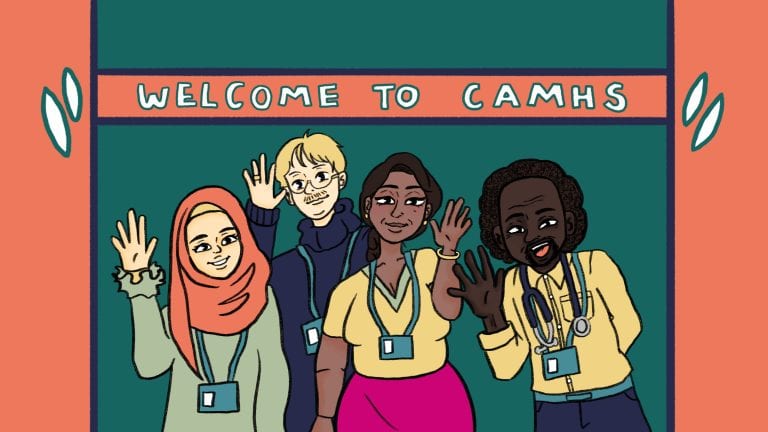
Find out more about Child and Adolescent Mental Health Services, common worries and questions about accessing mental health support, and coping with being on a waiting list for support.
People in England can get free support to help them with their mental health through the NHS.
This support can look different depending on what you’re struggling with and how old you are, but can include talking therapies and medication, as well as other types of support to help you take care of your general wellbeing.
In England, general practitioners (GPs) can prescribe some mental health medications to adults. Other support (like talking therapies, or medication if you’re under 18) are provided by different NHS services.
Asking for help with your mental health can feel scary, but for a lot of people, it’s an important first step to recovery.
How do people access mental health services?
There are two main ways to access help from NHS mental health services – by referring yourself or getting a referral from a professional like a doctor or teacher.
Refer yourself for help
Some services accept self-referrals, which means you can ask them for help yourself. You usually do this through an online form or by getting in touch by email or over the phone.
If you’re under 18, some services may need a parent or carer to refer you. They may still say that people can self-refer, because you do not need a professional to refer you.
Speak to your school, college, or GP
Other services need you to be referred by someone else, for example, a GP or a teacher at school.
It can be frustrating to have to ask someone else to refer you, especially if you feel like it’s delaying you getting help.
The reason that some services say you need to be referred by a professional is so that they can make sure you ask for support from the service that’s the best fit for you. Often, lots of similar services exist, and a professional can help you understand your options, the support available, and how long you might have to wait for help.
If you’re in school or college, it can often be quicker to speak to someone there and ask them to refer you. Lots of schools and colleges also work with the NHS to provide NHS mental health support in school or college.
If you’re not in school or college, or if you don’t want to speak to them and ask for help, you can see a general practitioner (GP). Everyone in England can register with a GP surgery for free. You can register with most surgeries online, starting by finding a GP on the NHS website.
If you’re struggling with an eating problem, it is important you make an appointment with your GP so that they can check your physical health as well as making sure you get the mental health support you need.
What should you say if you need help from a mental health service?
It can feel challenging to ask for help from a mental health service, especially if you haven’t done it before, but there are things you can do to help you feel ready and more in control.
This information is specifically about getting a referral to a mental health service. If you’re looking for more general information about opening up about your mental health, check out How to talk to someone about your mental health.
Decide who to talk to
If you need a professional to refer you to a mental health service, it’s often up to you who you speak to.
Some young people find it easier to speak to someone they already know, like a teacher, while others feel more comfortable speaking someone new, like a GP.
Remember that the people in these roles are used to speaking to young people about their mental health. An important part of their job is to listen to young people who are struggling and to help them to access the right help so that things can get better.
Think about how you’ll explain your situation
It can be difficult to know how to explain what you’re struggling with but giving the person you’re speaking to as much information as possible will help them to make sure you get the support you need.
Some people find it helpful to write things down as a list or make a mind map. You could practise talking to someone you trust (like a parent or carer) or ask a friend to come with you to start the conversation.
You might also use a tool like Doc Ready, which lets you build a checklist of things you’re struggling with. The online tool breaks things down into categories like moods, experiences, worries, and actions. You then pick items to add to your personalised checklist, and there’s the option to write in your own items too.
Once you’ve finished your checklist, you can screenshot it, print it, or email it to yourself.
Consider what you’d like to happen
It’s likely that the person you’ve asked to refer you, and the service you’re referred to, will ask you if you have any ideas about what kind of support you’re looking for.
No one is expecting you to have all of the answers, and it’s OK to say that you don’t know. At the same time, it’s a good opportunity to tell people if you know what support you might want or have worries or concerns about accessing support.
Find out more about the types of therapy and support you might be offered.
Find out more about taking medication for your mental health.
Write down any questions
It’s really common to have questions about accessing mental health support. It can be helpful to write them down on your phone or in a notebook, so you don’t have to remember them all.
You might want to ask things like:
- How does confidentiality work in this service?
- What will happen next after this appointment?
- Is there a waiting list – and how long should I expect to wait?
- What treatment and support can you offer me?
- How do I get in touch if I need to update you because something has changed?
What to expect after you ask for help
The journey of accessing NHS mental health support can look different for everyone, depending on things like what they’re struggling with, where they live, or how old they are.
Usually, you can expect a few different things to happen when you ask for help:
You ask for help
When you talk to someone like a teacher or GP, they can explain your options so you can be involved in the decision about what happens next. If you refer yourself to a service, you’ll skip this step.
You're referred to a service
There are lots of different services available to help people who are struggling – you could be referred to a team in your school or college, Child and Adolescent Mental Health Services (CAMHS), a talking therapies service for adults, a community mental health team, or a specialist service (for example, for eating disorders). The name of the service might be different depending on where you live.
The service gets your referral
Usually, a service will take a bit of time to read any information in your referral, then they’ll offer you an appointment. You may have to wait for this appointment if the service has a waiting list.
Occasionally, the service might tell you that they’re not the right service for you. If this happens, they should explain which other services they think will be better able to offer you support.
When this happens, it can be disappointing but it’s important that you know that you still deserve support, and this has not happened because you have done anything wrong. Services only do this to make sure you’re referred to the best service for you, so you can get the right help as quickly as possible.
You have your first appointment
Your first appointment with a service is a chance for them to get to know you. It’s often called an assessment, but it isn’t about judging you – and it isn’t about ‘doing well’ or getting it right. It’s about the service understanding more about who you are, what’s happening in your life, and how you’re coping.
The service may already have some information from your referral, but they’ll usually ask you more to make sure they understand things fully.
It can feel difficult, or strange, to talk to someone new about your thoughts and feelings. The people who work in mental health services are used to talking to young people about their mental health. They won’t be shocked by what you tell them, and they won’t be angry. They want to listen, to make sure you get the help you need and deserve.
You work with the service to decide on your next steps
Once they understand a bit more about you and your life, the people at the service can talk to you about the support they offer and whether it’s the right fit for you.
You’ll often be able to talk about the next steps at the end of your first appointment, but sometimes the people you’re speaking with will need to go and speak to other people who work in their team before they can confirm details (for example, about the type of therapy you can be offered or how many sessions you’ll have).
If the service isn’t the right one to help you, they should explain why and tell you where else you can get support. It does not mean that the people you’ve spoken to think that you do not need or deserve help – it is usually because another service might be able to see you sooner or provide the right kind of support for you.
You might have to wait for support
Unfortunately, most people find that they have to wait a while for support (whether it’s talking therapy, an appointment to talk about medication, or a specialist assessment for autism or ADHD). This is because services do not have enough appointments available to help everyone straight away.
It can feel frustrating and disappointing to have to wait for support. The service should let you know how to get in touch if you need to tell them anything (for example, if your situation changes). They might also tell you about other support in your area, or about apps or resources that other young people have found helpful while they wait.
What to do if you’re unhappy with how a mental health service responds when you ask for help
Asking for help from a mental health service can be a big step, so it can be disappointing and frustrating when things do not go as you expect.
If your referral isn’t accepted
If a service doesn’t accept your referral, they should explain why. It might be because they need more information from you or the person who has referred you, for example, or it might be because there are rules about where you need to live to access the service. Sometimes it is because they think another service will offer you better support or be able to help you sooner.
If a referral isn’t accepted, it might leave you feeling disappointed, upset, angry, or invalidated. It’s important to remember that it is not about you or how much you’re struggling.
Services are often designed to offer a specific type of help to people in certain situations. The people who work in services do not want young people to have to spend time on a waiting list if another service could see and provide the support they need sooner.
If a referral isn’t accepted, it does not mean you have to manage on your own. The service should tell you where else you can get support, and you can always speak to your GP or another trusted adult and ask them to help you.
If you think that the service is the best option for you, you can often ask the person who referred you (like a GP or teacher) to ask for your referral to be reviewed or reconsidered. They might also be able to add some extra information to give more context or explain things better. This does not guarantee that your referral will be accepted, or that things will change.
If you’re unhappy with the type of support a service has offered or suggested
Services should always listen to young people (and their parents and carers) and work with you to make decisions about your care.
If you’re not happy with what a service suggests, you can talk to them and ask them to explain any decisions they have made. You can also ask them to talk about other options with you – for example, if there’s a treatment you think would be right for you.
If this does not help, there are people who can help make sure your voice is heard.
NHS services are run by NHS Trusts – NHS organisations that provide services for a local area. Each NHS Trust has a free service that helps people resolve concerns about their care. These services are often called PALS (patient advice and liaison service) or a feedback and complaints service.
Lots of organisations like Mind also provide advocacy services. An advocate is someone who does not work for the NHS (or a local council) who can help you to understand your options, express your views, and get answers to your questions.
If you’re unhappy with something else that’s happened at a mental health service
If you’re not happy with a mental health service, the first step is usually to let them know. They might be able to work with you to make changes or explain decisions.
You can do this in writing with an email or a letter, if you find it hard to talk in-person or over the phone. People often find it helpful to ask a trusted adult (like a parent, carer, or teacher) to help them, or to get in touch with a service for them.
If you don’t want to talk to someone (like the person who assessed you, or the person you have sessions with) about a problem, you can ask the administration or reception staff to help you. They can let you know who else you can speak to.
If talking to someone at the service hasn’t helped to resolve the issue, you can make a complaint. You can ask anyone at the service how to make a complaint, and they should tell you about the service’s policy.
NHS mental health services are run by NHS Trusts – NHS organisations that provide services for a local area. Each NHS Trust has a free service that helps people resolve concerns about their care. These services are often called PALS (patient advice and liaison service) or a feedback and complaints service.
Frequently asked questions about accessing NHS mental health support
Do I have to be registered with a GP to get NHS mental health support?
You do not need to be registered with a GP to access urgent help, for example, by calling NHS 111, 999, or going to A&E.
Often, mental health services say you need to be registered with a local GP to access support. This includes some services that you can refer yourself too.
Everyone in England can register with a GP surgery for free. You can register with most surgeries online, starting by finding a GP on the NHS website.
What if I’m a student and live somewhere else during term time?
Usually, it’s best to register with a GP wherever you spend most time – for most students, this will be wherever their university is.
If you need help and support while you’re away from university (for example, during university holidays) you can get emergency treatment from a GP or register as a temporary patient.
Find out more about getting medical care as a student on the NHS website.
Do I have to pay for mental health support if I’m a migrant, refugee, or asylum seeker?
GP and nurse consultations in primary care, treatment provided by a GP and other primary care services are free of charge for everyone.
Primary care is the first point of contact in the healthcare system. It includes general practice (GP surgeries) and community pharmacy.
You can find more information about the support you can get through the NHS on the UK government website.
Find support
Find trusted services that can support you when things feel overwhelming.