Jump to content on:
What are the five ways to wellbeing?
The five ways to wellbeing are five key actions people can do to support their own mental wellbeing.
Everyone has mental health, and the five ways to wellbeing are designed to be flexible so people can adapt them to fit into their lives and the things they like to do.
They are not designed to be a replacement for mental health care. People with mental health conditions might find the five ways to wellbeing helpful as part of their self-care, but, depending on their diagnosis, they’ll probably also get support through talking therapy and sometimes medication.
And the five ways to wellbeing are not designed to be a solution to everything. Things like poverty and discrimination (like racism or transphobia) need to be tackled on a bigger, societal level alongside people’s everyday actions. After a difficult experience (like experiencing violence or someone you care about dying), you might need additional support too.
What is the evidence behind the five ways to wellbeing?
The five ways to wellbeing come from a report by an organisation called the New Economics Foundation, which does research, runs campaigns, and develops policies.
The New Economics Foundation published a report that looked at lots of evidence about wellbeing and concluded that the five ways to wellbeing is a helpful set of actions.
1 – Connect
Research has found that being involved in things that give you the chance to interact with other people and having friends or family you can count on are both good for your mental health. In fact, it suggests that feeling close to (and valued by) others is a ‘fundamental human need’.
It’s good to have strong relationships with at least a few people as well as additional relationships (that might not be as deep) with a bigger network. Together, these relationships help us feel connected and boost our self-esteem.
If you want to make your connections stronger or build new connections, you could:
- video call or voice chat someone, instead of relying on written messages to keep in touch
- share a meal or a snack with someone
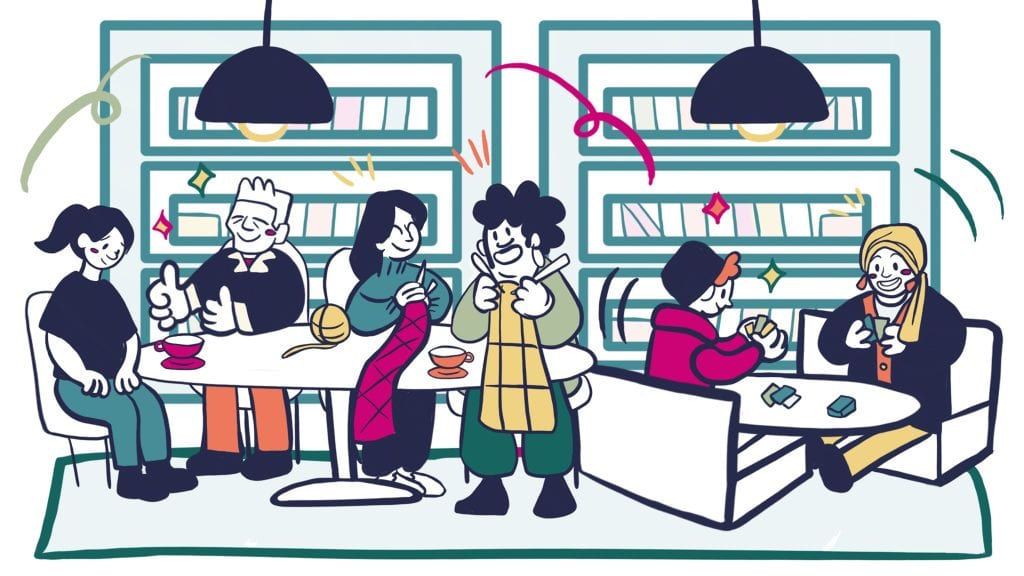
- play a card or board game with someone
- ask someone to try one of the other ways to wellbeing with you
- join a new club or society at school, college, or university
- find a volunteering opportunity on the government website
2 – Be active
We know that, in general, physical activity is associated with good wellbeing – but there’s still lots of research to do to find out exactly how this works.
The evidence we have so far suggests that it’s not just about the physical act of exercising. Movement can help distract people from negative thoughts and gives us a chance to show ourselves that we can manage challenging things.
You don’t need to run a marathon or spend hours in a gym. There are loads of ways to move, and even small changes can make a difference – exercising for as little as 10 minutes can boost your mood.
You can also combine being active with other ways to wellbeing, like connecting and/or learning something new.
It’s also important to remember that exercise isn’t healthy for everyone. Some people in recovery from an eating disorder, for example, might need to limit their movement to stay well.
If exercise is healthy for you and you want to try some new ways of moving, you could:
- go for a walk and explore your local area
- do some active chores – vacuum or sweep the floor, or dance while you wipe down surfaces
- learn a new dance routine
- try some yoga
- use an app to help, like the NHS Active 10 app
Want to know more?
Find out more about exercise and movement, and how to make sure it’s healthy and safe.
3 – Take notice
Our lives are often so busy that we miss the little details in the everyday. When’s the last time you paused and really focused on the world around you?
Being aware of sensations, thoughts, and feelings in the moment can have a positive effect on people’s wellbeing. You might hear this awareness being called ‘mindfulness’.
Building up your ability to take notice is the first step to being more in tune with the world and yourself. Want to give it a go? You could try:
- going for a walk and focusing on the information you can gather with each of your senses
- focusing on a creative activity
- cooking or baking and noticing how it involves all of your senses
- journalling
- using a mindfulness app
4 – Keep learning
Not all learning boosts wellbeing – it depends on the environment you’re learning in, what you’re learning, how you’re learning it, and what’s motivating you to learn.
The good news is that if you choose to learn in your spare time, you can be in charge! You can also learn with a friend, so you’re connecting with someone at the same time.
If you’ve ever picked up a new skill, you’ll know how great it feels when you master something after lots of practice.
Not sure what to learn? You could try:
- a new creative hobby, like scrapbooking, crocheting, or knitting
- following an art tutorial online
- learning some words or phrases in a new language
- a new kind of puzzle – you can find sudoku, word searches, and logic puzzles online
- following a new recipe
- borrowing an interesting book for free from your local library (you can find your local library on the government website)
5 – Give
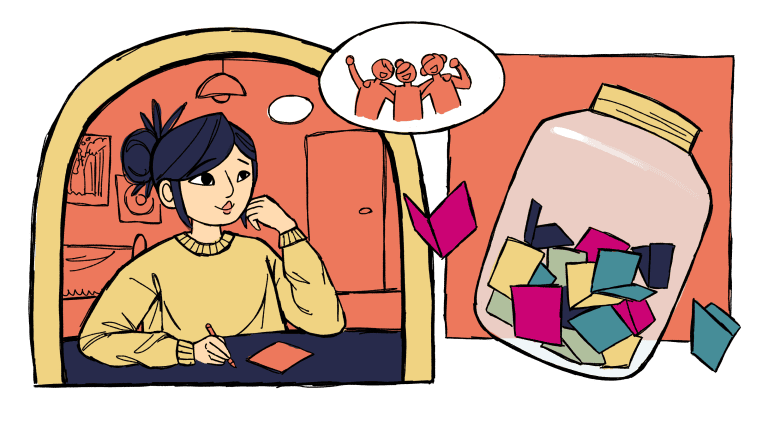
We know from research that working with people sets off the ‘reward’ systems in our brain, making us feel good. Research has also shown that doing just one act of a kindness a week can increase wellbeing.
It makes sense if you think about it – working with people gives us a sense of purpose and boosts our self-worth, and it’s nice to see that we’ve made someone else happy too. It also fits with some of the other ways to wellbeing by helping us connect with others and learn new things.
Obviously, it’s important to balance giving to others with taking care of yourself. We need to make sure our basic needs are met before we focus on others!
If you’re looking for a way to give something back, you could:
- find a volunteering opportunity on the government website
- try a random act of kindness
- find a thoughtful way to say thank you to someone who’s important to you
- call someone who would appreciate some company – for example, an older relative
- help a friend or younger sibling understand their homework
- send an encouraging message (or a card) to someone going through a tough time
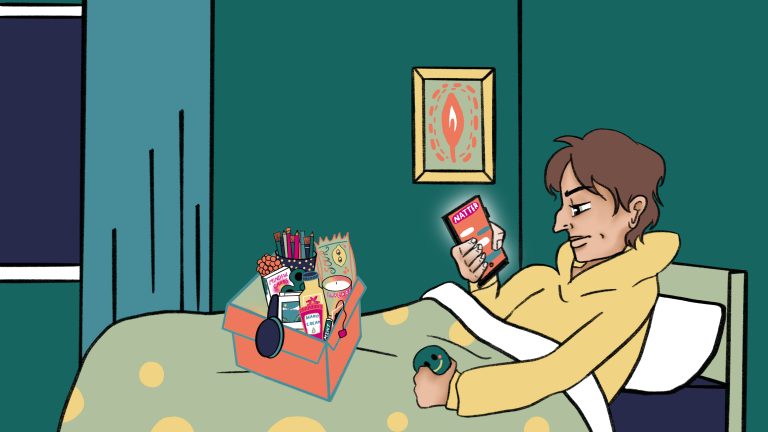
Text NATTER for help
Anyone can text ‘NATTER’ to 85258 to seek
help, wherever they are in the UK. It’s a free, anonymous service and available 24/7.
More about NATTER