In brief:
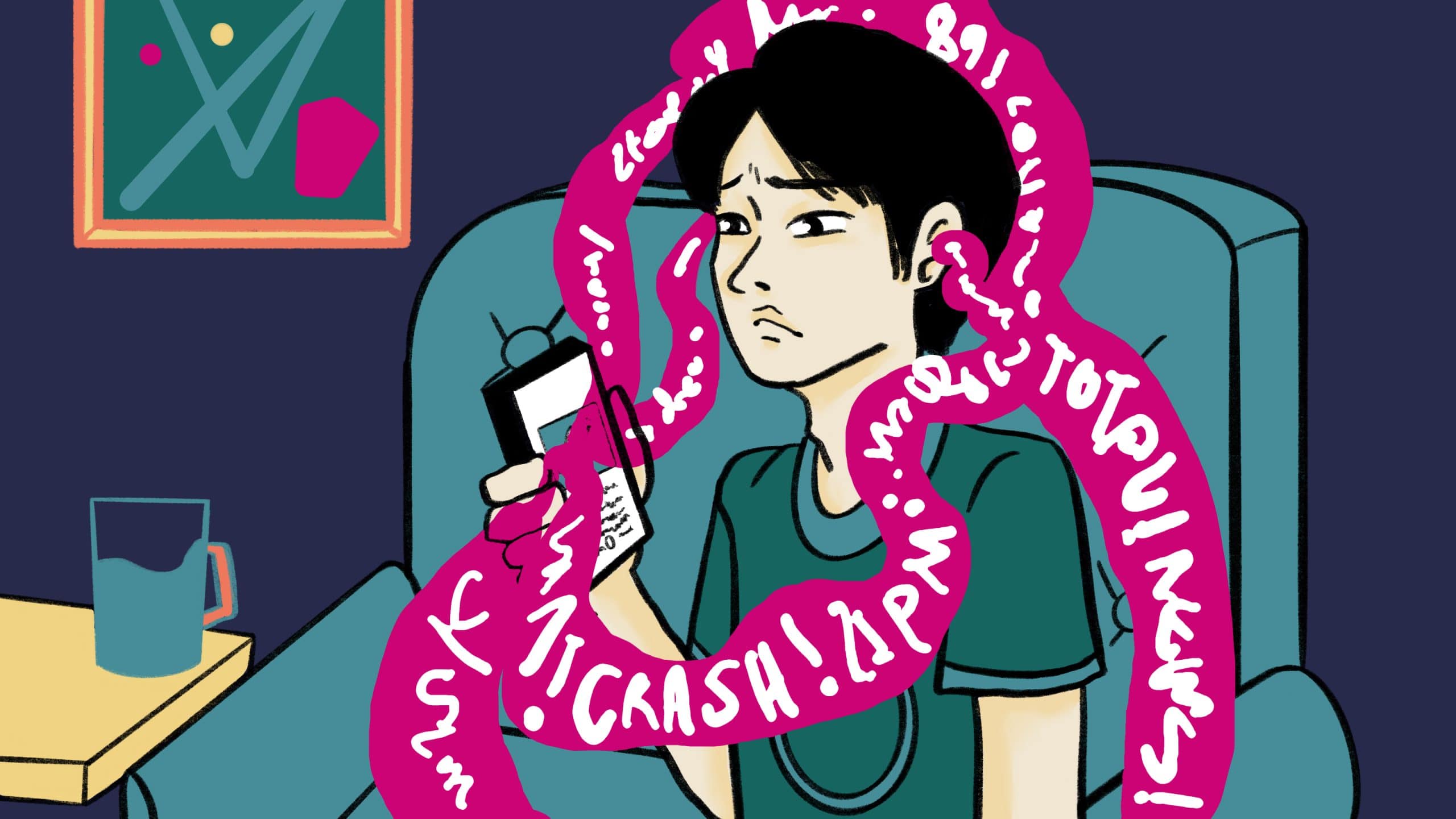
- New research into loneliness, connection, and young people’s mental health found that lots of young people in England are struggling and feeling disconnected right now.
- The causes are complex (it’s not all because of social media) – and many of the challenges young people face are outside of their control.
- The good news is that support is available for young people who are struggling – and that we can work together as a society to create the changes young people need and deserve.
You may have seen media headlines this week about the number of young people with no close friends and how many young people are experiencing distress and loneliness. The media is talking about a new report called ‘The Loneliest Generation’ – but things aren’t as bleak as the headlines might make them seem.
What is ‘The Loneliest Generation’ report? Are young people really becoming more lonely?
‘The Loneliest Generation’ is a new report written by a charity called the Institute for Public Policy Research (IPPR).
To understand what life is like for young people in England, researchers from the IPPR analysed two big sets of data and ran workshops with more than 150 young people.
The media is reporting some of the findings of the report: that 1 in 20 young people ‘report having no close friends at all’, and that fewer young people report having at least three close friends (compared to a decade ago).
But this is not all that the report says. The IPPR researchers concluded that young people are facing a lot of challenges – and many of them feel like society isn’t giving them the support they need. As a result, they feel disconnected from themselves, from each other, and from wider society.
When we’ve quoted the IPPR report, we’ve put the page number afterwards in brackets.
The Loneliest Generation report
1. If you’re struggling right now – you’re not the only one
It can be really isolating if you feel lonely or struggle with your mental health. But the IPPR report is really clear that you’re not the only one – in fact, it says that nearly half of young women (47%) and over a third of young men (36%) reported experiencing ‘psychological distress’ (p14).
This matches what we’ve found through Best For You. Earlier this year, we surveyed 2,002 young people and 68% said that, in their own view, they had experienced one or more mental health difficulties in the past 12 months.
Why are more young people saying they’re struggling with their mental health?
There’s lots of debate about why more young people are reporting mental health difficulties. People are trying to figure out whether it’s because young people’s mental health is getting worse overall, or whether it’s because more people are aware of mental health problems or feel comfortable saying that they’re struggling.
The IPPR researchers say the data suggests there’s a ‘genuine decline in young people’s wellbeing’ (p14). This is because the data shows that the impact of the difficulties that young people are talking about is getting more intense – if people were just talking about difficulties more, the impact would have stayed the same.
This does not mean that every young person will struggle with their mental health – but it’s important to know how many young people are struggling for two reasons.
It reassures people that they’re not alone. What you’re going through is understandable – and it can be helpful to remember that there are people who have also struggled with their mental health but who are happier and healthier now.
It shows how urgent it is that we understand why more young people are struggling and what we can do to help.
2. Young people are finding life difficult for lots of reasons
There isn’t one simple reason that explains why young people are struggling. The IPPR report says that ‘the foundations of a good adolescence have eroded’ (p5), meaning young people today are facing lots of extra challenges on their journey to adulthood.
Lots of articles about the report mention phones and social media. They’re not wrong – the report does talk about the impact of a digital childhood. It says that a lot of young people spend a long time online because, ‘for young people, the digital world is not a distraction from real life; it is real life’ (p9). It explains that the young people the researchers spoke to acknowledged the benefits of technology but also talked about the downsides too. Some linked spending time online to falling out with friends or struggling with their emotions.
But the IPPR report doesn’t just talk about the internet. It also acknowledges lots of other challenges too. It says:
Young people lived through the COVID-19 pandemic, which disrupted their education or opportunity to start working.
Young people have fewer apprenticeship and job opportunities now. It’s hard to get your first job because there are fewer jobs available in areas like retail and hospitality, and there are fewer graduate jobs for young people with degrees too.
Young people find it hard to rent or buy their own homes because it isn’t affordable, so more people live with their family when they don’t want to. Young people who do live on their own or with friends have to spend a lot of their income on their housing.
Young people are facing an ‘increasingly unpredictable set of global, economic, ecological, technological circumstances’ (p7), including living through things like Brexit.
Austerity (when a government reduces its debt by spending less money and raising taxes) meant less money was spent on things to help young people, like youth outreach and parenting programmes. The report explains that this means it’s harder for young people now to get the everyday help they need as they grow up, and for them to get help quickly if they start to struggle.
3. These problems are not your fault – or your responsibility to fix on your own
The IPPR report is very clear that young people can’t (and shouldn’t) be expected to sort this out on their own.
Lots of people talk about agency, which the IPPR report explains as ‘having the belief and ability to take actions that change your life’ (p20). Sometimes, people misunderstand this and think that it means young people need to get on with things and push through all of the challenges they face – but this is unrealistic and unfair.
The IPPR report points out that a lot of the things that make life difficult for young people aren’t their responsibility. It also explains that agency is a skill that everyone has to be taught to develop – it’s not a characteristic anyone automatically has.
We know young people have amazing ideas and skills and that they can do great things – that’s why the future is not hopeless! But young people did not create the situation they find themselves in – and it isn’t on them to fix it on their own.
It isn’t your fault that there’s less support nowadays
The IPPR report says that the reason that so many young people find that ‘small problems become big challenges’ (p13) is that the support system for young people is weaker after austerity (when a government reduces its debt by spending less money and raising taxes). This means that young people sometimes find it difficult to get the help they need.
It’s important to remember that there are still lots of services working together to support and help young people. If you’re struggling, you do not have to manage on your own and the Best For You website can help you to find the support you need.
Find support
Find trusted services that can support you when things feel overwhelming.
It isn’t your responsibility to make the internet safer
The IPPR report explains that a lot of young people who have been exposed to harmful content online feel like adults (including the people who work at tech companies and in government) could have taken steps to protect them. Some of the young people said they felt like adults had a duty to protect young people and had deserted them.
Online life
Learn how online life can affect you, from staying safe to gambling, porn, sexting, and what to do if you see something upsetting.
It isn’t your responsibility to create spaces to meet friends in-person
The IPPR report points out that there are fewer youth clubs and youth workers nowadays – and that this has the biggest impact on young people who don’t have big houses (with space to spend time with friends) or lots of money to spend on activities and clubs.
It isn’t your responsibility to develop agency on your own
The researchers say that schools (and other institutions working with young people) can help young people build agency if they create an environment where:
relationships are strong
mistakes are a part of learning
there are opportunities to demonstrate choice and resilience
but that, in England, young people don’t always have this. Data shows that compared to other countries, ‘children in England have worse experiences in school around belonging, wellbeing and feeling safe’ (p21). Instead, young people told researchers they felt like they were under a lot of pressure but that they didn’t always have control over what happens next.
4. There is support available for young people who are struggling
Despite all of the challenges mentioned in the IPPR report, there are still lots of services that exist to help young people – but we know it’s not always easy to find and access support.
Young people told the IPPR researchers about stigma, fearing judgement, and not knowing where to go to get support for mental health, employment help, or post-16 guidance.
This matches what we found in our Best For You research. We asked 2,002 young people what had stopped them (or would stop them) accessing digital mental health support: 34% of young people said not knowing where or how to access it, and 32% of young people said being unable to find resources that help with their problem.
We rebuilt the Best For You alongside young people, to make it easier to find clear, trustworthy mental health information and signposting.
On this site, you can find information about:
Coping with life challenges – including friendships, social media, and managing emotions
Safe, free apps that support wellbeing
Access to urgent help – including a free, 24/7, confidential text service
We believe that no young person should have to figure out mental health concerns on their own, so we’re here to provide NHS-approved information and make it easier for people to find the right support for them.
5. The future is not hopeless
The headlines of the articles about this report can seem quite bleak when they talk about how young people are ‘experiencing distress and loneliness at every turn’ – but things are not hopeless.
The IPPR researchers point out that ‘it’s not too late to change course’ (p23). In fact, figuring out the issues that are making life harder for young people and affecting their mental health is the first step to things getting better – when we understand the problem, we can work towards solutions. And they also acknowledge that ‘young people are a source of immense talent, ideas and potential’ (p23).
The IPPR researchers say they’re going to work with ‘young people, the adults that support them, and others to create the changes that young people deserve to see’ (p23). Then they’ll publish another report in 2027, where they’ll talk about the ‘solutions to rebuild the connections, institutions and opportunities young people need to thrive’.
At Best For You, we’re looking forward to reading the next report. Until then, we’ll continue to support young people by making it easier for them to get the mental health information and support they need, whenever they need it.
Find support
Find trusted services that can support you when things feel overwhelming.