Jump to content on:
Friends can be great. They can make us laugh, encourage us, and offer us support. For most young people, friendships are also an important part of growing up and becoming more independent. As young people become adults, they tend to spend more and more time with their peers – and their friendships become more complex too.
What young people told us about friendships
When Best For You surveyed 2,000 young people, friendship and relationship problems were the top reported life challenge. Young people told us that making friends feels ‘crucial’, but sometimes they feel under pressure – and friendships aren’t talked about enough.
This guide has answers to some of the most common questions young people have about making friends, keeping friends, and dealing with problems and toxic friendships.
What does a good friendship look like?
A good friendship is one where you can be yourself, have fun, and feel safe and supported. Good friends look after each other because they care about what happens – and they want the best for each other.
It’s important to know what a good friendship looks like, because it helps you to spot when things aren’t right – and helps you know what to aim for.
What are the signs of a good friendship?
Signs of a good friendship include that you:
- enjoy spending time together
- feel good after you’ve spent time together
- listen to and respect each other
- want to help each other and want good things for each other
- feel like you can be yourself – you don’t have to hide things or pretend
- know you can have boundaries about how you want to spend your time, or the things you do and do not want to do
- know how to disagree on some things – without it turning into a big argument
- agree on the things that matter most to you, like supporting your rights
If a friendship is not all these things, it does not always mean it’s a bad, toxic, or unhealthy friendship. It can take time for a friendship to grow and for people to become close.
Is it OK to disagree with your friends?
Most of the time, yes!
Friends do not have to agree on everything – they might support different sports teams, like different political parties, or follow different religions – and that’s OK. What matters is that you agree on the things that are really important to you, like respecting other people or fighting against discrimination. Some people call these sorts of things ‘core values’.
How can I be a better friend?
Being a good friend means:
- spending time with them doing things you both enjoy
- listening to them
- respecting them
- wanting the best for them
- challenging them if they’re making unhealthy choices
- being yourself – and accepting and liking them when they’re being themselves
- knowing it’s OK to disagree on some things
Being a good friend does not mean accepting someone being unkind or disrespectful to you.
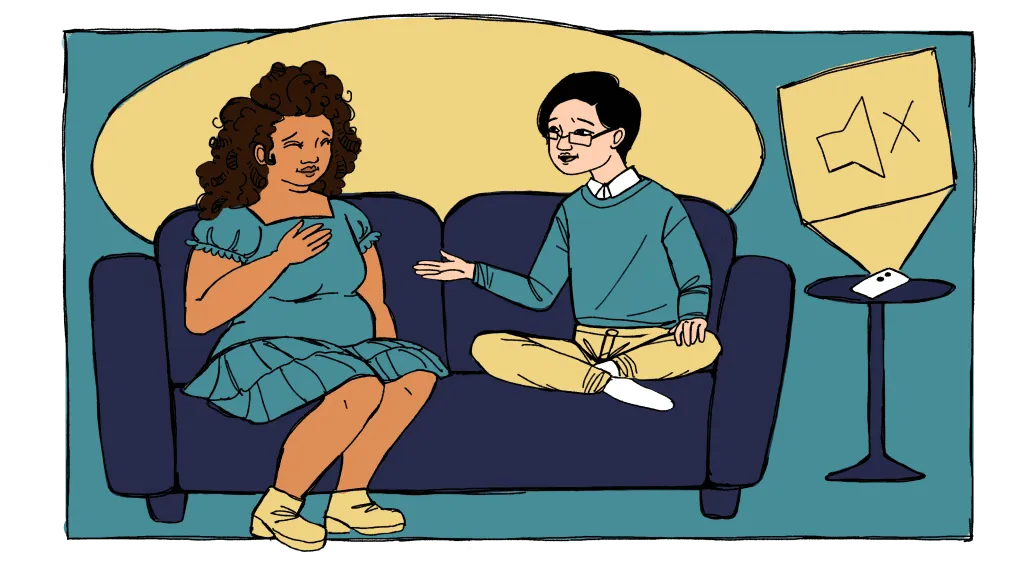
Listening to your friends
Listening to important conversations is a skill – it’s something we can work on and get better at.
Making friends
Making friends is a big topic – and it’s OK to have questions about how to make friends and keep your friendships strong.
Is it normal to find it hard to make friends?
Yes, lots of people find it hard to make friends. It can be difficult when you’re a teenager, as everyone’s figuring out who they are and you spend a lot of time at school or college, where you don’t choose your classmates.
Young people often have a lot of change in their lives, like starting a new school, college, or university, getting a job, or moving away from home, which can also mean figuring out new friendships too.
How do I make new friends?
There’s no step-by-step guide that’s guaranteed to help you make friends, but there are some things to remember:
Most people are pretty friendly. It just takes someone to smile and say hello!
Look out for anyone else who’s on their own. They might be looking for a new friend too, so take the first step and start a conversation.
Clubs and societies are great places to find people with shared interests. You could look for something sporty or creative, or a space to volunteer.
Start things off by organising something. If you want to spend more time with someone, be brave and ask if they want to get a coffee or go for a walk.
Ask open-ended questions. Small talk can feel awkward – but questions that can’t be answered with just a ‘yes’ or ‘no’ help to get conversations started.
Friendships take time to build. You usually need to get to know someone and spend time together before you feel close and trust each other.
Can I make online friends safely?
Online friendships can provide spaces to connect over shared interests or get advice from people doing through similar stuff – but it’s difficult to safely make genuine, full friendships online.
When you’re chatting to someone online, you do not know if they’re telling the truth about who they are – including basic things like their age and where they live. This can make it dangerous, as an adult could pretend to be your friend because they want to scam or harm you. Online friendships are also more fragile, because someone can disappear, for example, if their real life gets busy or they lose access to their account.
Things to remember if you’re spending time online
If you’re spending time online:
- stick to apps and sites that are designed for people your age
- learn about the tools available to block and report users
- have boundaries about how much you share – for example, using a pretend name and not sharing where you live, where you go to school, or photos of yourself
- remember that you never have to reply – if you feel uncomfortable, you can leave a conversation
- stay in public threads – it’s a red flag if someone quickly wants to move to a private chat or to message you on another forum
While there are opportunities to chat to people online – and they can feel like a fun connection – the friendships you make online will often feel incomplete. There are limits to how much you can share and trust each other because you can’t safely know for sure who the other person really is.
This means it’s important that online friendships aren’t your only source of connection. Everyone needs in-person or real-life friendships too.
Online life
Find out what to do if you see something upsetting online, including how to report harmful content.
Unhealthy or toxic friendships
It’s normal for friends to sometimes have arguments or problems that they can work through. But sometimes friendships are unhealthy – people often call these friendships ‘toxic’ because they can cause harm.
What is a toxic friendship?
A toxic friendship is a friendship that has a negative impact on one (or both) of the people in it. It might be because someone is unkind, or because two people aren’t a good fit. An unhealthy friendship is harmful over time – it’s a pattern, rather than a one-off argument or falling out.
What are the signs of a toxic friendship?
There are lots of signs that a friendship might be toxic or unhealthy.
A friendship might be toxic if you:
- don’t enjoy spending time together – it often makes you feel angry, anxious, or sad
- feel bad about yourself when you spend time with someone (or afterwards)
- feel unsafe or scared
- are arguing all the time and always seem to fall out
- don’t respect each other
- feel like you can’t be yourself and have to pretend to be someone else
- feel like things are always a competition between you
- often want to say negative things about someone after you’ve spent time together, for example, if you regularly complain about them to someone else
A friendship might be toxic if someone:
- says unkind or mean things
- often feels jealous of someone else, and can’t feel happy for them
- pressures someone into doing things they’re not sure about or don’t want to do
- blames someone else for things or gets them into trouble
- tries to embarrass someone in front of others
- ignores someone when they’re with other people, or when they can’t be bothered to reply
- leaves someone out on purpose
- talks about someone else behind their back
- is always the one ‘in charge’ and in control
Sometimes unhealthy friendships happen because one person is in the wrong and being unkind. But sometimes they happen when people aren’t a good fit for each other, and both people are making unhelpful choices.
When should I stop being friends with someone?
You always have the decision to end a friendship if it is not good for you.
You might decide to stop being friends with someone if, overall, the friendship has a negative impact – if it makes you feel sad, anxious, or angry far more often that it makes you feel happy, or if you argue more than you enjoy spending time together.
You might also decide to stop being friends with someone if they do something that really hurts you, like breaking your trust or pressuring you into doing something.
How do I stop being friends with a toxic friend?
Some people end unhealthy friendships gradually by letting the friendship drift. This might mean not being the one to start conversations, taking longer to reply to messages, or saying ‘no thanks’ when they suggest spending time together. This can help give you some space, while you work out what’s right for you. It’s kinder not to ignore someone without explaining why (sometimes called ghosting them), as long as it’s safe to do so.
You can also end an unhealthy friendship by having a conversation where you explain that the friendship doesn’t feel good or healthy for you and suggest that you need to spend some time apart.
How you choose to end a friendship is up to you. It depends on what feels safe, and whether you think you need more space and a bit of time apart, or whether you need to end the friendship for good.
If you’re not sure what to do, you could speak to a trusted adult. If you tell them about the friendship, they can help you make a plan for what to do next. If you don’t want to speak to an adult you know, you can always text NATTER for free, confidential support.
Text NATTER for help
Anyone can text ‘NATTER’ to 85258 to seek
help, wherever they are in the UK. It’s a free, anonymous service and available 24/7.
More about NATTER
Dealing with friendship problems
Friendships can be complex. Most people will, at some point, fall out or disagree with a friend – and friends can sometimes make bad choices and hurt each other too.
Is it normal to argue with friends?
Yes, sometimes. No one is perfect, so it’s normal for friends to argue occasionally. You might fall out over something that feels big and important – or something small that turns into a bigger argument.
There’s a big difference between disagreeing with someone and having an argument. You can disagree about something (like a team you support or the best way to solve a problem) without arguing if you respect each other’s opinions. Sometimes you might ‘agree to disagree’, which means you can get along, even though you’re happy to accept that you’ll never have the same opinion on something.
When people talk about an argument, they usually mean a disagreement that’s become bigger. People might end up speaking louder (or shouting) or being unkind to each other. Arguments often leave people feeling angry, frustrated, or upset.
What do I do if I’m always arguing with my friend?
If you feel like you’re always arguing and never getting on, it might be time to think about whether the friendship is good and healthy for you both.
You might decide that you need to make some space, so you don’t spend as much time together – or you might want to talk to them about the fact you’re arguing a lot and try to figure out what you can both do to get on better.
If you’re not sure what to do, you could speak to a trusted adult. If you tell them about the friendship, they can help you make a plan for what to do next. If you don’t want to speak to an adult you know, you can always text NATTER for free, confidential support.
How do I fix a friendship after an argument?
It’s OK to take some time to yourself after an argument with a friend – it can be helpful to give you both chance to calm down. But try not to leave it too long before you find time to talk things through, as you might go over things again and again in your head and feel even worse.
Then ask your friend if you can talk – you can acknowledge what happened, but also that you care about them or want to fix your friendship by saying something like: ‘I feel really sad that we argued yesterday because we’re normally such good friends – can we talk about it at lunchtime?’.
What can I say after an argument?
When it’s time to chat, focus on how the argument made you feel – and listen to what they have to say too. If they’ve hurt you, you can’t control whether they take responsibility or apologise – all you can do is tell them what the argument was like for you and decide what you want to do depending on how they respond.
Don’t forget to think about whether you need to say sorry too – it’s possible for both people in an argument to have things they want to apologise for, no matter who started it.
At the end of the conversation, you decide what you want to do next. Hopefully you’ll have both been able to share how you feel, apologise (if you need to), and sort things out – but if things didn’t go well, it’s up to you whether to try again or whether the friend has hurt you so much you need to take some time apart.
Should I tell anyone else about an argument?
If you’ve had an argument, it’s OK to talk to someone you trust to get their perspective and support – but try not to get everyone involved, especially if you share a friendship group.
It’s often best to speak to a trusted adult – you could even ask them if they can help you and your friend have a conversation to sort things out. This is sometimes called mediating – when the adult is there to help people talk things through without taking a side.
Why do I feel left out when I’m with my friends?
There are lots of reasons you might always feel left out when you’re with friends – sometimes it’s accidental, and sometimes it’s a sign that it isn’t a good friendship.
A lot of the time, it isn’t because you’re being left out on purpose. Sometimes plans happen spontaneously, without a lot of planning – for example, because people just happen to be free or because they’ve bumped into each other. If you have a bigger group of friends, people might do things with just a few people and accidentally leave others out of chats or plans.
If you’re worried about being left out, you might also focus on it a lot. This can make smaller actions, like people talking quietly to each other, posting together on social media, or choosing to sit next to each other, feel really important or hurtful.
And sometimes, people feel left out because their ‘friends’ are excluding them on purpose or being thoughtless.
Feeling left out can really hurt. It can be upsetting and it’s normal for it to make you feel embarrassed, ashamed, angry, or a mix of different feelings.
What should I do about feeling left out?
How you respond to feeling left out is up to you. You can try to ignore it and keep going. You can make more of an effort to suggest plans, or to spend time individually with people as well as doing stuff in a group. Or you can have a conversation with one of the friends you’re closer to and explain that you feel left out and hurt. Of course, you can also try to make new friends.
All of these options have pros and cons – and what works for you will depend on the situation you’re in. It’s often helpful to talk things through with an adult you trust. Having space to chat can help you understand more about how you’re feeling and what’s making things difficult. If you don’t want to talk to an adult you know, you can always text NATTER to speak to a trained volunteer by text.
Is it normal to lose friends?
Yes. While some friendships last for a really long time, other friendships only last for a shorter time – like while you’re in the same class, or while you work together.
Throughout your life, it’s normal for some friendships to become less close or for you to lose touch with some people as things change. Sometimes it’s because you don’t spend as much time together anymore (like in education or at work), or because people move away – or sometimes it’s because your lives become really different, for example, if one of you becomes a parent or gets a job that leads to a change of schedule.
Of course, these things don’t always cause friendships to drift apart – plenty of people stay good friends despite having really different lives.
How do I cope with a friendship breakup?
Dealing with a friendship ending is really hard. You might feel angry, sad, confused, disappointed, or relieved – or a mix of these feelings, or nothing at all. It’s important to give yourself space to feel these feelings, and to cope with them in healthy ways.
Some people find it helpful to express how they feel by writing things down or recording voice notes they don’t send.
Journalling about friendship
Journalling can be a great way to express how you feel if you’re going through a friendship breakup.
Just like if you’re experiencing the end of romantic relationship, it’s important to take care of your basic needs. This means the boring, everyday self-care like eating enough, sleeping, getting outside (if you can), and speaking to people, as well as continuing to try to do the things you enjoy.
If you use social media, it can also be a good idea to think about whether you need to put any boundaries in place – like muting or unfollowing someone (even if it’s just for a bit).
Lots of people find it helpful to talk to a trusted adult about how they’re feeling and managing after a friendship ends. It might be a parent or carer, teacher, or youth worker – but you can always text NATTER to 85258 to speak to a trusted adult by text if you need support.
Text NATTER for help
Anyone can text ‘NATTER’ to 85258 to seek
help, wherever they are in the UK. It’s a free, anonymous service and available 24/7.
More about NATTER
Friendships when you’re neurodivergent
Why can friendships feel harder if you’re neurodivergent?
Friendships can feel harder if you’re neurodivergent because they involve communication, energy, and executive functioning skills (the skills we need to organise ourselves and make decisions).
Why do these things make friendships harder?
Communication
Things like starting conversations, understanding body language, and expressing how you feel might be more difficult for you – and that can impact how you interact with other people. You might also worry about interrupting other people, or finding conversation topics other people find interesting.
Executive function
The skills we use in our everyday lives are also important in friendships. People might struggle with things like forgetting to reply to messages or forgetting things their friends have said, even though they care. Some people also find it difficult to manage their emotions and find they end up arguing often.
Masking
Masking is when people put on a performance (or mask) for other people to hide or minimise their neurodivergence. It can be difficult if you mask a lot and feel like your friends don’t know the ‘real’ you – but it can also feel scary and vulnerable to not mask in front of people.
Energy
Some neurodivergent people talk about their ‘social battery’ draining faster than other people’s – they might not be able to spend as much time chatting or doing activities before they need time to rest. This can make it hard to make friends.
Confidence
Neurodivergent people sometimes feel worried about friendships and social interactions, especially if they’ve struggled before. This can make it harder to try making new friends or speaking to new people if you’re worried about what might happen.
These things can make friendships challenging, but they are not something that is ‘wrong’ with you.
It’s possible for neurodivergent people to have positive, long-lasting friendships – and plenty of neurodivergent people do!
How can I make friends if I’m neurodivergent?
Making friends as a neurodivergent person sometimes involves adapting or changing the advice that’s usually given to neurotypical people. You could look at the advice for making friends near the top of this page, but as well as that, it can be helpful to remember:
It’s OK if you don’t become close friends with everyone you speak to – sometimes you don’t get along, or sometimes you stay as acquaintances.
If you have a strong or special interest, this can be a great way to meet like-minded people, especially if there’s a local club or society you can join.
It’s OK if you find small talk a bit awkward – you could think about topics you could talk about or practise a bit if it helps you feel more prepared. Some people find small talk boring or unnecessary, but it’s often how more interesting, in-depth conversations start.
You can ask a trusted adult to help you if you feel lonely or want support making new friends. They could help you make a plan, practise small talk, or come with you to an event or club.
It’s always up to you whether you tell people that you’re neurodivergent. Some people find it helps others understand them, while for others it’s something personal they only share with close friends.
You get to decide what a good friendship looks like. Your friendships might not look like neurotypical people’s, and that’s OK as long as you respect each other and help each other.
Getting more help with friendship problems
Most people will experience friendship problems at some point in their lives. Sometimes they feel small, and like you can handle them on your own – but sometimes people need a bit more support.
What should I do if I’m really worried about a friend?
If you’re worried about a friend’s wellbeing, it is always OK to tell a trusted adult.
There are some situations where telling an adult is the right thing to do to keep people safe, even if your friend does not want any adults to know.
If you’re concerned that your friend cannot keep themselves safe or is at risk of harm (for example, if you’re worried that they will do something to hurt themselves or someone else, or you find out that they are experiencing abuse) you must tell an adult you trust.
You also need to tell an adult if you feel that your friend’s problems have become too much for you to handle on your own.
Worried about a friend?
You do not have to manage on your own – we’ve got information about who to tell, how to tell an adult if your friend doesn’t want you to, and how else you can support them.
When should I tell an adult about friendship problems?
Sometimes you might be able to sort friendship problems out on your own, but signs that you should tell an adult include:
- you feel overwhelmed or like you cannot cope
- someone’s been bullying you
- someone’s threatened you or made you feel unsafe
- you feel pressured into doing things you do not want to do
- the situation is making it hard to focus at school or work
- the situation is affecting your sleep
Once you’ve told an adult what’s happening, you can work together to decide what to do next.
Find support
Find trusted services that can support you when things feel overwhelming.
Text NATTER for help
Anyone can text ‘NATTER’ to 85258 to seek
help, wherever they are in the UK. It’s a free, anonymous service and available 24/7.
More about NATTER