Jump to content on:
It’s important for everyone to be able to talk about how they’re doing – we all need spaces where we share their thoughts and feelings. And if you’ve noticed something is up with a friend, it’s likely you’ve wanted to ask them if they’re actually OK.
But starting a conversation about mental health isn’t always easy, and lots of people are in the habit of saying they’re ‘fine’, even when things aren’t alright.
Emergency?
If anyone is in immediate danger, call 999 now.
If you need urgent help for mental or physical health, call NHS 111 or get help from NHS 111 online.
It’s OK to ask if someone’s OK
Lots of people aren’t sure whether asking a friend about their wellbeing is the right thing to do. They might worry that they’ll make everything awkward, or that asking them directly about their wellbeing will make things worse.
But talking about mental health is one of the most powerful things we can do to challenge stigma and misinformation. It shows your friends that you understand that things can be difficult and that you’re a safe person for them to talk to, and it gives people the chance to open up if they’re struggling.
Choosing when to talk about mental health
Sometimes, you might not have the chance to prepare for a conversation about mental health. A friend might open up to you unexpectedly, or you might notice something that makes you worry about a friend’s wellbeing. In those situations, you can only do your best to offer support.
But if you’re planning to ask someone if they’re OK, you could think about your timing.
Try to choose a time when you’re both free to talk – not as you’re rushing into a lesson or when you’re about to get on different buses, for example.
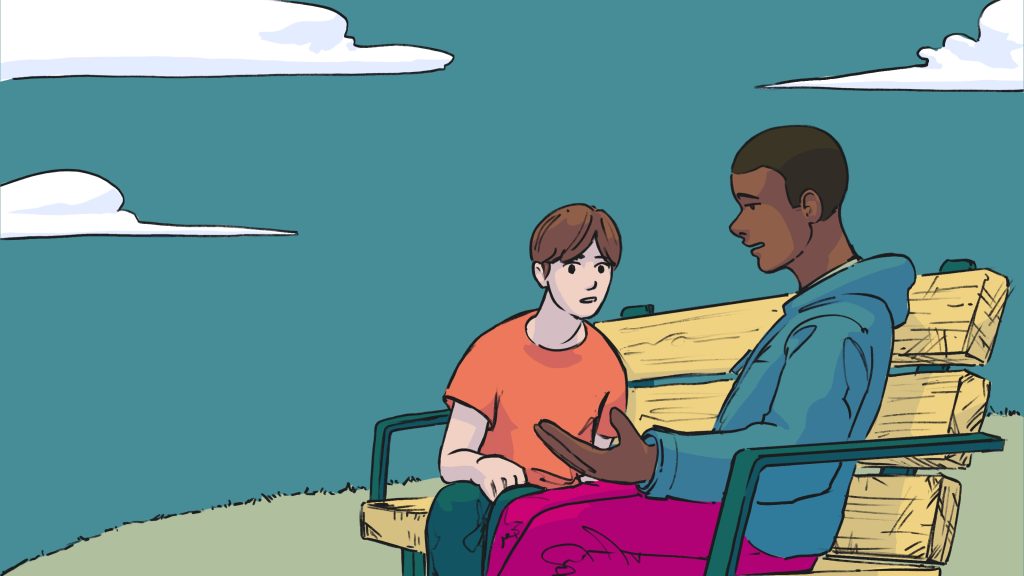
You could also consider where you’ll ask them. Some people find it easier to talk if they’re sitting side by side rather than face to face, so you could arrange to go for a walk or plan a relaxed activity, like cooking or crafting, to help them feel relaxed as they talk.
Other people find it much easier to communicate through writing, so you could pass a notebook back and forth or message each other even if you’re in the same room.
How to start a conversation about wellbeing
Some people find it helpful to plan what they’ll say, at least at first.
While it’s impossible to predict the whole conversation, you might want to decide how you’ll bring up the topic of mental health to begin with, or how you’ll express that you’re worried.
You could think about how to explain the things you’ve noticed that have made you concerned about someone, making sure you don’t sound judgemental or annoyed. Or, if you don’t know how to put this into words, you could think about bringing up the topic of wellbeing in a more general way.
However you start the conversation, you can then ask your friend a question to give them the chance to open up. It can be helpful to choose an open question like ‘how are you feeling at the moment?’, rather than something where they can answer ‘yes’ or ‘no’.
Examples of conversation starters
You start by telling them what you’ve noticed:
- I’ve noticed that [whatever you’ve noticed] – how have you been feeling lately?
- You’ve seemed really tired recently. What’s been going on?
- It doesn’t seem like you’ve been yourself recently. How are you doing?
You could also try sharing how you’re dealing with something that’s affecting both of you:
- Sometimes the amount of work we have to do feels out of control! How are you coping with it?
- I’ve found the news really overwhelming this week. How have you found it?
- I find this time of year difficult with the changing seasons – it makes me feel so tired and low. How about you?
Or you could try using an example to kick-start the conversation:
- Did you see what [a celebrity] said about mental health this week? It made me think about how difficult it can be to talk about wellbeing. How have you really been lately?
- I saw this post on social media about mental health – what do you think about it?
- I read something about stress recently and it made me think about how I’m coping. How are you doing?
Listening is a skill
Find more information about listening to your friends when they open up about their mental health.

Asking about self-harm and suicide
It can feel really difficult to ask someone directly about self-harm or suicide.
But the evidence shows that it is a good thing to do. It helps to keep people safe and protects them from harm, and it does not ‘put the idea’ in their heads.
Try to use clear language by asking people if they have thought about hurting or harming themselves or ending their own lives, rather than using less clear language like ‘having dark thoughts’ or ‘doing something silly’.
Asking these questions gives people the chance to be honest if they have thought about hurting or harming themselves, so that together you can tell a trusted adult and get the support they need.
Emergency?
If anyone is in immediate danger, call 999 now.
If you need urgent help for mental or physical health, call NHS 111 or get help from NHS 111 online.
What to do next
Depending on what you discussed, you could send your friend links to trusted places to get support, like the Best For You website.
There might also be things you’ve said you’ll do together, like trying an app that supports wellbeing.
Your friend might have agreed to try some things on their own, like doing research into local organisations that might be able to offer them some extra support or getting out of the house a few times this week.
Self-care while helping others
If you’re supporting a friend with their mental health, it’s always important to make sure you’re looking after your own wellbeing too.

Find support
Find trusted services that can support you when things feel overwhelming.