Jump to content on:
What is medication for mental health?
Medicine can be used to treat mental health conditions, reduce symptoms, and/or prevent symptoms coming back. Mental health medication comes in a few different forms. You might be prescribed tablets or capsules, liquid, or – less commonly – injections.
Young Minds - Medications
Deciding whether to take mental health medication is very personal. It often depends on things like how old you are and the symptoms you experience.
Some people find medication really helpful, and no one should ever try to make you feel ashamed or embarrassed about taking medication for your mental health.
Other people might decide that medication isn’t for them right now, or they might want to try other types of support before (or instead of) taking medication.
How do you get mental health medication?
In the UK, mental health medications are prescribed by doctors. This means that, after talking to you about your options and supporting you to make a decision, they give a pharmacy instructions about exactly what medications to give you (including the exact dose and whether to give you a tablet or liquid, for example).
Who prescribes the medication for you is likely to depend on your age.
Getting mental health medication if you’re under 18
Fewer medications are available for young people aged under 18.
If you’re under 18, a GP will usually refer you for a more specialist assessment. You’ll then be able to make a treatment plan, which could involve talk to a psychiatrist (a doctor who’s a specialist in mental health) about whether medication is right for you.
Getting mental health medication if you’re over 18
If you’re over 18, a GP can prescribe some common mental health medications. Some medications can still only be prescribed by a psychiatrist, a doctor who’s a specialist in mental health.
Trying to buy medication from an unregistered website could be illegal or dangerous to your health. The substance they’re selling as medication might be out of date, diluted, fake, or unsuitable for you.
How much does mental health medication cost?
In England, it is free to register with a GP. Anyone can register and you do not need ID, proof of address, or immigration status.
Some people have to pay for prescribed medication, but you pay a fixed amount for each prescribed medication, rather than the real cost of the medicine. Other people don’t have to pay at all – for example, children aged under 18 and people on certain benefits.
You can find out more about paying for prescriptions, including current costs, whether you can get free prescriptions, and whether you can save money by buying a prepayment certificate, on the NHS website.
Does mental health medication come with side effects?
Like most medications, medications for mental health can come with side effects as well as benefits. Some side effects go away once your body is used to a new medication, while others last longer.
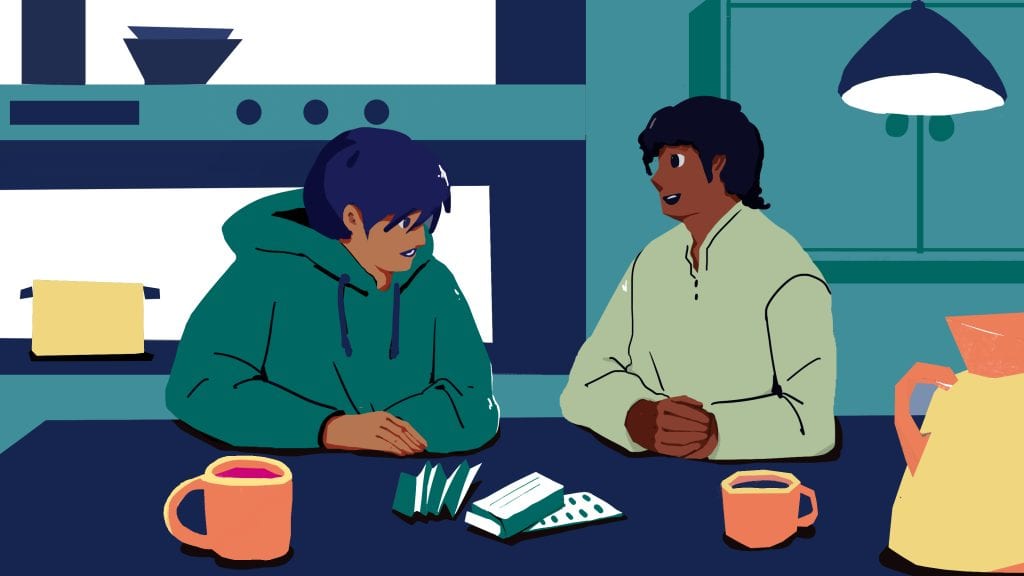
You can talk to the person prescribing your medication about the potential side effects before you decide whether you want to take it. You can also make a plan for what you’ll do if you experience some of the more common side effects.
Medication comes with a leaflet, which will list the possible side effects, and how common or rare they are (as well as other information). You can find copies of patient information leaflets for lots of mental health medications on the Mind website. If you don’t understand anything you read in the leaflet, ask a trusted adult, the person who prescribed your medication, or a pharmacist to help you.
Everyone responds to medication differently. It’s impossible to know whether you will experience side effects before you start taking a medication.
If you develop symptoms that you think are linked to starting or taking medication, get medical advice straight away.
In an emergency, call 999.
If you do experience side effects, you can talk to your GP or mental health team. You can also speak to a pharmacist. If you’re in England, you can also contact NHS 111 online.
Some people find they have side effects they find embarrassing to talk about, but doctors and pharmacists are used to having conversations about people’s bodies and all sorts of medication side effects. They won’t judge you, and they are there to help. Almost all pharmacies have a room or space where you can talk to the pharmacist in private – you can just ask whoever’s working at the counter, and they’ll let you know where to go (and if you’ll have to wait at all).
They can talk with you about the different options for managing side effects. These might include changing the dose of your medication, trying a different medication, changing things in your life (like avoiding certain foods that make a side effect worse, for example), or taking another medication to help with side effects.
Deciding whether to take medication for your mental health
Unfortunately, it’s not possible to exactly predict what your experiences of taking a medication will be, as similar people can respond differently to the same medication.
Most people find it helpful to have all of the information about medication before they make a decision.
You could ask the person prescribing the medication about:
- How long you can expect to wait for it to ‘work’ and make a difference.
- What the possible side effects are, and how many people experience them.
- Whether it might affect things like your ability to drive, if that’s relevant for you.
- How it might interact with other medications or supplements you take, or any drugs or substances you use.
- How long you might take the medication for – is it something you take just for a short period of time, or is it something you take longer-term?
- What you can expect to happen if you decide to stop taking the medication.
It’s OK to take the time that you need to decide whether to take medication at all, and to decide about taking any specific medication. You might want to talk it through with a trusted adult or talk about it anonymously by texting NATTER.
When is taking medication for mental health not your choice?
Most of the time, it’s up to you to decide whether to take medication for your mental health.
People are only given medication without making their own decision (or without their consent) in a few specific circumstances. These include if they have been admitted to (or discharged from) hospital under certain sections of the Mental Health Act, or if they’ve been assessed as not having capacity to consent to treatment. This means that doctors have decided that they’re not able to understand information and use it to make a decision.
In these situations, people should still be able to talk to the person (or team) prescribing the medication to find out about the medication and get help with any side effects.
You can find out more about your right to refuse medication on the Mind website.
Remembering to take your medication
Lots of mental health medications need to be taken each day, at roughly the same time.
If you struggle to remember to take your medication, you could try:
- setting an alarm on your phone
- downloading an app to help you
- taking medication alongside another part of your daily routine, like just before you brush your teeth
- storing medication somewhere safe where you’ll see it
- asking someone you live with to remind you, or asking them to message you if you live alone
- leaving yourself a note or sign
Always take your medication exactly as prescribed. Take advice or speak to the prescriber before you take any other substances in addition to your treatment to avoid unintended side-effects or reactions.
Stopping taking mental health medication
It’s normal to worry about what might happen if you stop taking a medication.
Never change or stop prescribed treatments without following guidance from your prescriber. If necessary, get advice before you do so.
You might hear people saying that mental health medications are addictive, but for most medications, this isn’t true. Research suggests that antidepressants and antipsychotics are not addictive, and your doctor (or whoever is prescribing the medication) will tell you if you’re thinking about taking a medication that can be addictive, like a benzodiazepine (a type of sedative medication).
The reason that people shouldn’t stop taking mental health medications suddenly is because they might experience withdrawal effects. These happen when you suddenly go from taking a full dose of a medication to taking a small amount (or not taking it at all).
Talk to your GP
Your doctor (or whoever prescribed the medication) can work with you to come up with a plan to stop taking the medication safely. This often means lowering the amount you take gradually, while making sure you have other support around you, and a plan for if you start to struggle with symptoms of your mental health condition again.
What mental health support can I get as well as medication?
There are other types of treatment for mental health problems (and symptoms of them) including talking therapies and other support like mentoring.
You don’t usually have to choose between medication and other forms of support. If taking medication is right for you, you can still access talking therapies and other interventions.
Emergency?
If anyone is in immediate danger, call 999 now.
If you need urgent help for mental or physical health, call NHS 111 or get help from NHS 111 online.