Jump to content on:
There are lots of different ways to talk about your mental health and wellbeing with a professional. This can be helpful because it gives people options to access support differently depending on the issues they’re struggling with and the type of talking they find helpful.
But it can also feel confusing or overwhelming if you’re not sure what to support to look for – or if you’re offered a specific type of support and you don’t know what it means.
This page is here to give you more information about the different types of talking treatments that might be offered to help you with your mental health.
Different ways of accessing support
Often, the first questions people have are about how they’ll talk to someone, and whether anyone else will be there.
In person, over the phone, or online talking treatment
How you go to sessions usually depends on the situation you’re in and the service or organisation that’s supporting you.
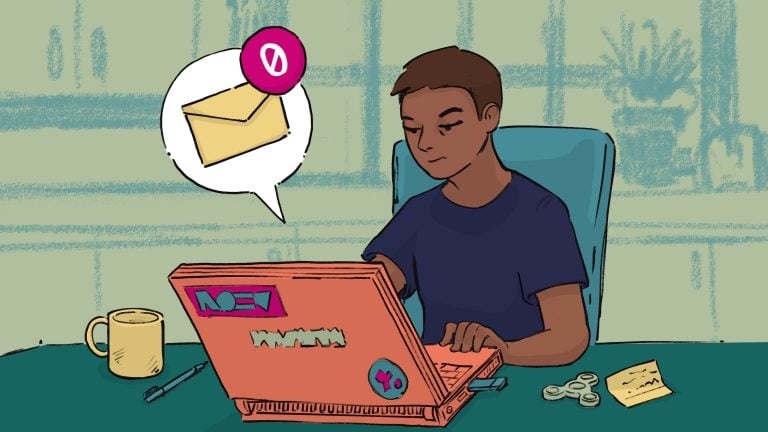
You might be offered in-person sessions, support over the phone, or support through a video call (using something like Microsoft Teams or Zoom).
How do you know which option is best for you?
You might find that one of these options works better for you.
Some people find it annoying to have to spend time travelling to appointments or feel more comfortable chatting when they’re in a familiar space, for example, while other people might not have access to a quiet private space to talk at home.
Some people might find it weird to talk over the phone without seeing someone’s face on camera, while others might feel less anxious if they don’t have to worry about facial expressions.
Using technology like phone calls and video calls can also allow services to offer more appointments, which can help reduce waiting lists.
It’s a good idea to tell the service or organisation helping you if you’d prefer to have your sessions online, in-person, or over the phone, or if you’ve got any worries about the type of session you’re being offered. They can talk to you about the options and help you find a solution that works.
Guided self-help
If you’re doing guided self-help, you’ll be given a booklet or access to an online course that you work through in your own time.
You’ll also have regular sessions with someone (often called a psychological wellbeing practitioner) where you can talk about how you’re getting on and any parts of the booklet or online course you’ve found tricky.
Guided self-help gives people the chance to learn more about their thoughts and feelings, while getting support as they learn coping strategies. They can keep using these techniques and coping strategies even after their sessions of guided self-help have finished, so it can be helpful in the long-term.
One-to-one support
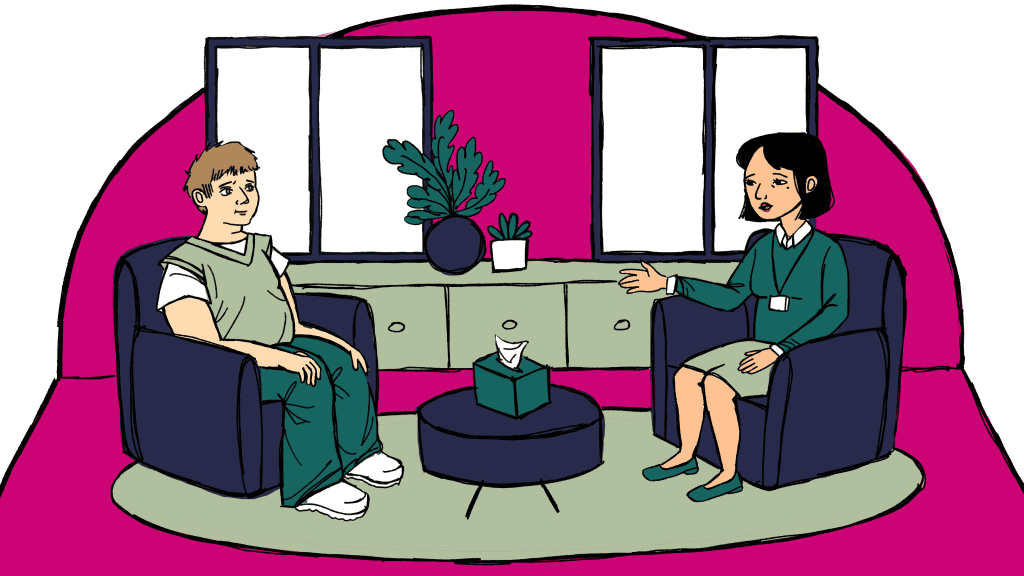
One-to-one support means that it’s just you and the person supporting you in the room or on the call.
Group support
In group support, you’ll be part of a group of people – usually, everyone in the group will be struggling with something similar. These groups are usually led by one or two facilitators, often people who work as mental health nurses, assistant psychologists, counsellors, or therapists.
Support with your family or carers
Sometimes you’ll access support with members of your family (especially your parents or carers). Getting support as a family means everyone learns to work together to support you to recover.
What’s the difference between therapy, counselling, mentoring, and social prescribing?
Counselling
Counselling gives you a safe space to talk about your thoughts, feelings, and experiences with a professional.
Your counsellor won’t give you advice or tell you what to do, but they’ll listen and help you understand yourself better and find your own ways to cope.
Counselling is usually less structured than talking therapy. It doesn’t teach you specific techniques or follow a set way of understanding how people think and behave.
Counselling might be a good option for you if:
- You want emotional support, rather than practical advice or structured exercises
- You’re happy to give it a try, and you can access it more easily (or sooner) than talking therapy
Counselling might not be a good fit if:
- You find structure helpful or want to focus on specific goals
- You want to learn specific ways of coping
- You want quick answers or advice
Mentoring
Mentoring involves getting guidance and encouragement from someone with more experience than you.
Mentoring can be quite broad (so you can talk about anything going on in your life) or it can focus on something specific like emotional wellbeing, education, or career choices.
What your mentoring is able to cover usually depends on the organisation running the mentoring scheme, but it’s your decision what to focus on within the topics that are available.
Mentoring might be a good option for you if:
- You’re looking to build your skills
- You want guidance (or even advice)
Mentoring might not be a good fit if:
- You mainly want to talk about how you feel (unless you’re able to access a specific mentoring scheme that’s set up to talk through emotions)
- You’re experiencing a mental health condition and struggling to cope
Talking therapy
Talking therapy also involves having a safe space to talk about your thoughts, feelings, and experiences with a professional.
It’s usually more structured than counselling. You’ll follow a specific type of therapy, or your therapist might combine bits of a few different types of therapy to create a personalised blend for you. You might hear this called ‘integrative therapy’.
The different types of therapy all have different ways of explaining how our brains work, and different techniques for helping us to manage our emotions, challenge unhelpful thoughts, and change what we do.
Find out more about the different types of therapy available in the Different approaches to talking therapy section further down this page.
Talking therapy might be a good option for you if:
- You want practical strategies to manage the things you’re struggling with
- You’re willing to do some ‘homework’ between sessions
- You’re happy to give it a try, and you can access it more easily (or sooner) than counselling
Talking therapy might not be a good fit if:
- You want quick answers or advice
- You just want to talk and explore your feelings without set goals or exercises
Social prescribing
Social prescribing connects people with non-medical activities and services near them. It’s about finding things to do that support your wellbeing and help you to feel better.
You’ll see someone called a social prescriber (or sometimes a link worker) and they’ll talk to you about your life. They might ask you about what you like doing, as well as what you’re struggling with and what your goals are.
Then, you’ll work together to make a personalised support plan, which usually involves thinking about other groups, activities, and services you can try in your local area. Social prescribing is usually holistic, which means it includes both your physical and mental health (and recognises that they affect each other).
For example, if you’re lonely, a social prescriber could help you find an art club, a free sports activity, or a volunteering opportunity that fits with your interests and skills. If you’re struggling with money, they can help you find a service that helps with debt or budgeting, as well as helping you find free options for exercise or socialising to look after your overall wellbeing.
Social prescribing might be a good option for you if:
- You want to find out more about things you can do to look after yourself
- You find it difficult to find information by yourself, or need a bit of support to try something new
- Being lonely or isolated is affecting your mental health
- Something else (like money, or housing, or employment) is affecting your mental health and you need specific support
Social prescribing might not be a good fit if:
- You mainly want emotional support or help with coping strategies
- You’re not getting professional support for a mental health condition when you need it – social prescribing can sometimes be helpful alongside therapy or counselling, but it is not a replacement
- You’re already engaged with lots of activities in the local community and don’t need or want to try anything new
- You’re not able or willing to try any new activities or join any groups to see what they’re like
Different approaches to talking therapy
There are lots of different types of talking therapy. Over the years, experts have learned a lot about how our brains work, and so there are now different approaches to helping people cope with difficult thoughts, feelings, and experiences.
These types of therapy do not contradict each other – they just have different focuses. This means it’s possible for therapists to combine bits of different therapy together to create the best approach to help you. You might hear this called ‘integrative therapy’.
All of the types of therapy available through the NHS are evidence-based, which means research has found that they are safe and that they have helped people with certain mental health conditions or symptoms.
The type of therapy you’re offered will depend on things like how old you are, the problems you’re experiencing, and what’s available in your area.
Cognitive behavioural therapy (CBT)
Cognitive behavioural therapy (CBT) helps people understand how their thoughts, their emotions, the things they do, and the way their body feels affect each other.
Who is CBT for?
CBT is used as a treatment for lots of different mental health problems.
CBT can help people with:
- Depression
- Anxiety
- Panic attacks
- Self-harm
- OCD
- PTSD
- Eating problems
- Psychosis
- Bipolar disorder
- Schizophrenia
- Personality disorders
- Sleep problems
- Alcohol or drug misuse
- Long-term physical health conditions, including long-term pain
This isn’t a complete list, so you may find that you’re offered CBT for something else that isn’t in the bullets above.
You might hear people talking about specific types of CBT, for example, CBT-ED to help people with eating disorders or trauma-focused CBT to help people with PTSD.
How does CBT work?
Cognitive behavioural therapy (CBT) helps people understand how their thoughts, their emotions, the things they do, and the way their body feels affect each other.
Once you understand how these things are linked, you can try to do things differently or challenge the way you’re thinking to help you feel better. For example, this might look like trying a new activity and seeing how it affects your mood, or challenging thoughts that make you feel more anxious by looking at evidence for different ways of thinking about a situation.
CBT often involves doing activities or tasks in your day-to-day life between sessions. This gives you the chance to practise techniques and try things that you might find difficult. Your therapist will help you plan these tasks and activities, then you can talk to them about how things went and if there’s anything you struggled with.
How do you do CBT?
You can do CBT as guided self-help, one-to-one, or as part of a group.
It can be delivered in-person, over the phone, or online.
CBT is usually a short-term treatment, with a fixed number of sessions. How many sessions you have will depend on what you’re struggling with and the service supporting you. Your therapist will usually help you plan how you’ll manage when your sessions end, as well as talking to you about how to get more support if you need it.
Examples of how CBT approaches situations
For example, if someone has an argument with a friend, they might:
- feel sad and lonely
- experience physical sensations like low energy or a heavy chest
- start thinking ‘no one likes me’ or ‘I ruin all my friendships’
- stop messaging their other friends and cancel plans
This might become a cycle, where they keep feeling worse because they’re thinking very negatively about themselves and withdrawing from everyone.
In CBT, they might:
- talk about whether there’s any evidence that no one likes them (or if it’s that they’ve fallen out with one particular friend)
- plan to do something that they think might help their mood (like messaging someone else or going for a walk) as an experiment, to see if it helps them feel better
As another example, before a test or exam, someone might:
- feel really anxious and overwhelmed
- start thinking ‘I’m stupid and I’m going to fail, I’m a failure’ or ‘I just can’t do exams’
- put off revising, because it feels scary, difficult to begin, or even pointless
- have a headache or feel sick
As a result of all of this, things feel worse when they do sit down to do the exam or test because they’re less prepared (because they haven’t revised) and are overwhelmed by their feelings and thoughts about being stupid.
In CBT, they might:
- talk about how they feel about tests, and recognise that how they do in a test or exam isn’t the most important thing about them (and does not mean they’re stupid)
- do some problem-solving to figure out how to make revision easier, and practise by starting with small chunks of revision to see how they manage
- practise some ways they can breathe or ground themselves during the test or exam, and how they can cope with any stressful thoughts (like ‘I can’t do exams’) on the day of the exam or test
Compassion-focused therapy (CFT)
In compassion-focused therapy (CFT), being compassionate means learning to notice suffering and doing your best to reduce or prevent it. CFT teaches people to be compassionate to themselves, as well as others.
Who is CFT for?
Compassion focused therapy (CFT) can be used as a treatment for lots of different mental health problems. It can be especially helpful for people who are self-critical or who blame themselves a lot, regardless of what mental health diagnoses they do (or do not) have.
CFT can help people with:
- trauma
- anger
- anxiety
- pain
- depression
- body image struggles
- eating problems
- self-harm
This isn’t a complete list, so you may find that you’re offered CFT for something else that isn’t in the bullets above.
How does CFT work?
In compassion focused therapy (CFT), being compassionate means learning to notice suffering and doing your best to reduce or prevent it. CFT teaches people to be compassionate to themselves, as well as others.
The idea is that being more compassionate helps you to cope with your thoughts and feelings, as well as difficult things that happen in life.
Compassion focused therapy uses some techniques from CBT, as well as the idea that people respond in different ways depending on whether they’re trying to protect themselves from threat, get things done, or relax and feel calm.
It involves learning about how your brain works and how you respond to emotions, as well as developing skills around being compassionate to yourself and other people. It also involves learning to spot when you’re being self-critical and talking to yourself negatively and learning how to respond to make these thoughts ‘quieter’ or to reduce the impact they have on you. Lots of people will also work on learning how to help themselves feel calm and safe.
How do you do CFT?
You can do compassion focused therapy one-to-one or as part of a group.
It can be delivered in-person, over the phone, or online.
CFT is usually short- or medium-term. How many sessions you have will depend on what you’re struggling with and the service supporting you. Your therapist will usually help you plan how you’ll manage when your sessions end, as well as talking to you about how to get more support if you need it.
Examples of how CFT approaches situations
For example, if someone has an argument with a friend, they might start thinking ‘I’m a terrible person’ or ‘I ruin all my friendships’. In compassion focused therapy, they might:
- Normalise their feelings, for example, by recognising that feeling guilty or stressed is a normal response and shows that they care about their friendship.
- Recognise that their body is responding to what it thinks is a threat and use breathing exercises to calm that response down so they can think more clearly.
- Challenge their self-critical thoughts, maybe through writing a letter to themselves or trying to imagine what advice they’d give to a (separate) friend in a similar position. This might involve looking at the evidence for their self-critical thoughts.
- Talk about whether they want to try to make things up with their friend, being compassionate towards themselves and their friend
As another example, before a test or exam, someone might feel anxious and find it difficult to make themselves revise because they start thinking ‘I’m stupid, I can’t do exams, and I’m definitely going to fail’. In compassion-focused therapy, they might:
- Normalise their feelings, for example, by recognising that feeling stressed and anxious before a test is a very normal response (and does not mean they’re unprepared or doomed to fail).
- Recognise that their body is responding to what it thinks is a threat, and that this response is part of why they’re procrastinating and struggling to revise.
- Use breathing exercises to calm that response down so they can think more clearly. They might also learn about their drive system, which they can use to be motivated in a healthy way.
- Recognise that self-criticism is because their brain is trying to protect them, but it’s doing it in a really harsh way. They might try to challenge their self-critical thoughts by writing a letter to themselves, or imaging what a kind, wise person who understands them and is trying to help would say. This might involve looking at the evidence for their self-critical thoughts.
- Problem-solve and plan manageable revision sessions, which is a compassionate thing to do because it will help do their best in the test or exam and reach their goals.
Creative arts therapy
Creative arts therapy helps people to understand, explore, and communicate how they feel in a safe setting. It might also help them to find new ways to look at situations or problems they’re experiencing.
Who is creative arts therapy for?
Creative arts therapy can be helpful for anyone who finds it difficult to put their thoughts and feelings into words, regardless of what mental health diagnoses they do (or do not) have.
It is often recommended as a treatment option for people with psychosis and/or schizophrenia. It can also be especially helpful for people who have experienced trauma.
How does creative arts therapy work?
Creative arts therapy can involve:
- physical art (like using pens, paints, clay, or collage, as well as digital media like photos and videos)
- music
- dance
- drama (which might include things like inventing characters, telling stories, playing games, or using puppets or masks)
It helps people to understand, explore, and communicate how they feel in a safe setting. It might also help them to find new ways to look at situations or problems they’re experiencing. Some people find that therapy involving movement helps them to feel more in touch with their body and the world around them too.
Whatever form of creative arts therapy you’re doing, your therapist won’t try to tell you what your art means. Instead, you’ll talk about how you felt while you were making it and what it means to you, if it has a meaning at all.
Creative arts therapy is not about being ‘good’ at art, and you don’t need to have any experience with art, music, or drama to find this type of therapy helpful.
How do you do creative arts therapy?
You can do creative arts therapy one-to-one or as part of a group.
It’s usually delivered in-person but can be delivered online too.
The number of sessions you have can vary a lot. Some people might only have one or two sessions, while others will have sessions for the medium- to long-term.
Dialectical behavioural therapy (DBT)
DBT teaches people skills to understand and manage their emotions, cope with distress, and build strong healthy relationships with other people. At the same time, it’s about accepting who you are.
Who is DBT for?
DBT is designed for people who feel emotions very intensely and/or who can do things impulsively (without thinking of the consequences first).
DBT can help people with:
- self-harm
- borderline personality disorder (also called emotionally unstable personality disorder)
- eating problems
- alcohol or drug misuse
- other unhealthy risk-taking behaviours
This isn’t a complete list, so you may find that you’re offered DBT for something else that isn’t in the bullets above.
How does DBT work?
DBT teaches people skills to understand and manage their emotions, cope with distress, and build strong healthy relationships with other people. At the same time, it’s about accepting who you are.
In DBT, you usually build a strong supportive relationship with your therapist, which helps motivate you to make changes that mean you feel better and find life easier.
The skills you learn in DBT can be grouped into two types. Acceptance skills help you understand yourself and why you do certain things (for example, self-harming or using alcohol to cope). Change skills help you to do things that help you, instead of things that harm you (for example, finding healthier ways of coping).
It can take time to learn the skills from DBT and practise using them in your everyday life.
How do you do DBT?
You can do DBT one-to-one or as part of a group. Some DBT programmes combine both, so you have one-to-one sessions as well as group sessions.
It can be delivered in-person, over the phone, or online.
It can be difficult to learn DBT techniques by yourself, but there are some self-help materials that you can use alongside one-to-one or group DBT (or after your sessions finish, to remind you of everything you’ve learned).
DBT usually runs over a fixed number of sessions, because you work through a set list of skills and techniques. DBT is relatively long-term – you might have weekly sessions for between 6 months and 12 months, for example. Exactly how many sessions you have (and how long you have sessions for) will depend on the service supporting you.
Eye movement desensitisation and reprocessing therapy (EMDR therapy)
EMDR therapy helps people to process traumatic memories (which are often, but not always, linked to PTSD).
Who is EMDR for?
EMDR is for people who have experienced trauma and have PTSD or C-PTSD as a result.
How does EMDR work?
EMDR therapy helps people to process traumatic memories (which are often, but not always, linked to PTSD).
It’s based on the idea that traumatic memories don’t get properly processed, which means they remain intense and distressing.
EMDR helps people to re-process these difficult memories in the present by asking them to remember the distressing memory while their therapist guides them to move their eyes from side to side (or taps their hands one by one, or plays sound in each ear one at a time).
We don’t know exactly how this works, but experts think the side-to-side sensory input helps people’s brains to re-process the difficult memory, so it feels more manageable going forward.
How do you do EMDR?
You usually do EMDR one-to-one, not as part of a group.
EMDR should always be delivered by a therapist with the right training – it isn’t something you can do on your own at home.
How many sessions of EMDR you have will depend on your experiences and the service supporting you. As a guide, the average is that people have between 6 and 12 sessions – but some people will need fewer, and some people will need more.
Family therapy
Family therapy gives the whole family the chance to work together to improve their relationships and find solutions to problems (including day-to-day issues, as well as bigger problems).
In family therapy, everyone has the chance to express their thoughts and feelings – the therapist can support everyone to understand each other’s points of view and what different people in the family need.
Who is family therapy for?
Family therapy can help people with:
- trauma (including if someone has PTSD)
- anxiety
- OCD
- depression
- bipolar disorder
- eating problems
- schizophrenia
- alcohol or drug misuse
- grief
- difficult life events like divorce, moving a long distance, or illness in the family
This isn’t a complete list, so you may find that you’re offered family therapy for something else that isn’t in the bullets above.
The word ‘family’ can mean whoever you live with, or whoever supports you. It does not have to mean your biological parents.
How does family therapy work?
When someone’s struggling with their mental health, it can affect their whole household. When young people are struggling, the adults in their life often want to help them, but they might not know how. Sometimes, family relationships might also contribute to someone struggling with their mental health.
Family therapy gives the whole family the chance to work together to improve their relationships and find solutions to problems (including day-to-day issues, as well as bigger problems). In family therapy, everyone has the chance to express their thoughts and feelings – the therapist can support everyone to understand each other’s points of view and what different people in the family need.
If someone in the family has a mental health condition, it’s likely that family therapy will also involve psychoeducation, which means the therapist will teach everyone about the mental health condition so that they all understand what’s going on.
There are different types of family therapy. Your therapist might use one specific approach or use bits from different approaches.
How do you do family therapy?
You do most of your family therapy sessions as a group with your family members, though sometimes a family therapist will meet with people one-to-one, as well as in the group session.
You usually do family therapy in-person or online.
How many sessions of family therapy you have will depend on your experiences and the service supporting you. You might only have a few sessions, or you might have sessions for several months.
Find support
Find trusted services that can support you when things feel overwhelming.