Jump to content on:
What counts as movement and exercise?
The way we move our bodies can make a huge difference to our wellbeing, but not everyone finds it easy to be physically active and it isn’t always healthy.
Movement (or physical activity) is any activity that involves moving your body – including everyday things like doing chores or popping to the supermarket for food. When people talk about exercise, they usually mean an activity you choose to do because of the physical activity it involves, like going for a run or playing a team sport.
Both movement and exercise can be beneficial for your wellbeing – and they’re not always easy to separate out. If you choose to walk to the supermarket rather than taking the bus, for example, you’re bringing exercise to an everyday activity.
Sometimes, people think you have to do intense exercise like spending ages in the gym or following a strict plan to get benefits to your wellbeing, but this isn’t true. There are lots of ways to bring more movement into your everyday life, and they can all be helpful.
How can you add more movement to your everyday life?
You don’t have to spend money to be active. You could try:
- walking to school or to the shops instead of taking the bus or driving
- going for a walk while you chat to a friend
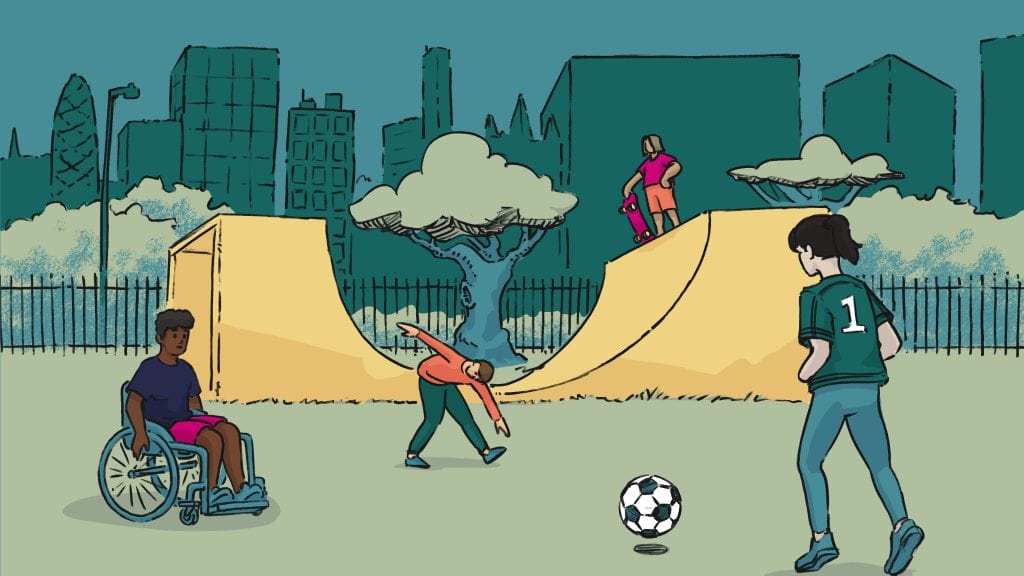
- playing – running, jumping, climbing, and catching all count as movement
- using outdoor gym equipment in a local park
- dancing around your home
- active gaming (for example, with a games console or VR)
- cycling, skateboarding, roller-skating, or rollerblading
- following a free exercise video online
- chores that get you moving, like vacuuming
- free local clubs and activities, including Parkrun
You could also try a new sport or an activity like swimming. Schools, colleges, and universities often have teams or clubs that welcome beginners, and adults can often find low-cost clubs or courses through their local council.
Support for disabled and LGBTQ+ people who want to exercise
Some people face extra barriers that make it harder to find safe ways and places to move, such as fearing for their safety when exercising, or having past experiences of stigma and discrimination when trying physical activity.
If you’re disabled or have a mental or physical health condition, you might need to speak to a medical professional involved in your care before starting a new way of moving or exercising.
There are organisations set up to help disabled people find local inclusive opportunities to exercise and be active (and ways to move at home), including We Are Undefeatable and Every Body Moves.
LGBTQ+ people can face discrimination as they try to access opportunities to move and be active. The organisation Pride Sports exists to improve access to sport for LGBTQ+ people through developing LGBT+ sports clubs and working with sporting organisations. If you live in London, Out for Sport has a database of inclusive sports clubs.
Why is movement recommended for mental health?
Movement has lots of physical health benefits like increasing heart, muscle, and bone health, but it can be good for our mental wellbeing too.
It can help us manage stress and can boost our mood. Depending on how you choose to move, it might also have other benefits like helping you to connect with nature or meet new people.
We know that taking notice of the world around us is good for our wellbeing, and lots of people find it helpful to use movement as an opportunity to focus on the present moment. This might look like paying attention to how different parts of your body feel before, during, and after you move, or noticing how the weather or external surroundings affect your experience of moving for mental health.
What do you need to do before you exercise?
Before you start exercising, there are some things you should think about:
Figure out if exercise is safe for you
If you have an eating problem or physical health condition, or have experience of over-exercising, you might need to speak to a medical professional before you start moving more or exercising in a new way.
It can be hard to remember this if you see a lot of messaging about the benefits of exercise – but this general messaging doesn’t think about real people (and what their minds and bodies need).
Consider how you think and feel about exercise
Is your motivation for exercising coming from a place of self-care and self-kindness, or is it something you’re pressuring yourself into because you think you ‘should’ be moving more? Are you judging yourself, or feeling ashamed about how your body looks or feels?
Exercise isn’t a magic fix, and on its own it isn’t generally the solution to low self-esteem or body image difficulties. Approaching exercise from a place of self-care means you’re more likely to build a healthy relationship with exercise and develop a routine that you can stick to.
Make decisions about exercise
Before you exercise, you usually need to make a few decisions to find the type of movement that works best for you.
Would you rather move on your own, with a friend or family member, or with strangers? Some people find it helpful to have others around for encouragement and motivation or find it easier to try something new with a supportive person by their side. Other people might feel OK about moving in front of strangers, but self-conscious about exercising in front of people they know. And some people are happiest solo.
Some people are happiest if there’s someone ‘leading’ an activity who can help with feedback on technique or encourage them to keep going. Other people prefer leading themselves, and don’t find it helpful to have too much of a structure set out for them.
You can think about where you would like to move too. Some people prefer being outside in nature or want to exercise for free, while others feel safer in a space like a leisure centre (or benefit from a space that stays the same temperature, regardless of the weather).
With this in mind, you can decide what kind of activity works for you. If you want to be with people, maybe an exercise class or sports club would work, while if you want to be outside on your own, you could think about how to go for a walk or run safely.
No type of movement is inherently better than others – what’s important is that you find something that feels good (and sustainable) for you.
Lots of people find it helpful to set themselves goals around exercise. The best goals are realistic – if you’re new to exercise, for example, it’s helpful to set yourself lots of smaller goals, rather than aiming to climb a mountain straight away. Common goals might be about how long you can do something for, or how much you can lift. Some people set goals in everyday life (like carrying shopping home or being able to run to the bus stop) that they can achieve as a result of exercise.
Plan your breaks
If you’re starting to move more (or differently), it’s a good idea to put some time aside for rest.
A healthy relationship with exercise involves taking breaks when you feel tired, injured, or unwell. Taking rest days, alongside including days where you focus on lower-impact movement, is important for helping your body – and mind – to recover from hard work.
It’s often a good idea to plan these rest days in advance, in the same way you might schedule any other activity, so they can’t be overlooked or forgotten.
Check in with yourself regularly
Once you’ve tried a way of moving, it can be helpful to pay attention to your overall experience. Are you happy with the way you’re moving – or do you want to try moving in a different way or place? Are you getting enough rest and eating enough to give you the energy you need? Do you need to check in with how you’re speaking to yourself around movement?
Find other ways to take care of yourself
It’s helpful for everyone to have more than one way of taking care of themselves – even people who can exercise safely need alternatives for if the weather gets in the way or if they’re ill or injured.
If you’re not sure where to start with adding more self-care into your life, you could read our page about five ways to wellbeing.
Can people with mental health conditions exercise?
Yes, people with mental health conditions can exercise. Lots of people with mental health conditions find that movement is an important part of their self-care, as it helps them manage their symptoms or stay well.
At the same time, people with mental health conditions can face extra barriers to movement and may have to think things through before getting started.
When you feel unmotivated or anxious
It’s really common to feel anxious before starting something new, whether that’s going for a walk in a new place, visiting a new swimming pool, or joining a new club or class.
You might also find that your energy levels vary – you might need to take more rest days, or build up to doing more movement over time. Some people find that they tend to have more energy at certain times of day, so adjust their schedule to make the most of it.
Exercise and panic attacks
If you experience panic attacks, it’s helpful to be aware of how the effects of anxiety might remind you of some of the signs of panic attacks, for example, feeling your heart beating faster or sweating a lot.
If you experience panic attacks, think about whether you want to gradually build up how much you exercise, rather than starting with a really intense activity. It’s a good idea to plan for how you’ll cope if you start to feel overwhelmed during exercise – for example, knowing the signs that you might need to take a break, or practising in advance some breathing or grounding exercises you can use.
If you take part in a class or club, it can be useful to talk to whoever’s running the session and tell them that you have experience of panic attacks so they know that you might need to take breaks.
Exercise and medication
Sometimes the side effects of medications (including medication people take for their mental health) can make it more difficult to exercise. For example, some people find it hard to regulate their body temperature and overheat more easily, while others struggle with feeling sleepy or dizzy.
If medication makes it difficult for you to exercise, you could talk to the person who prescribes your medication about the side effects to see if there’s anything you can try to reduce them. They might also be able to give you some advice about how you can exercise safely while taking medication.
You might also need to gradually build up how much you do (even if you were more active before you started taking a medication) or take breaks more often.
Exercise and eating problems
If you have (or are recovering from) an eating problem, you should speak to a trusted adult or medical professional before you exercise. It might not be safe for you to exercise if you’re not eating enough, or if your body needs to rest to recover. You might also be at risk of over-exercising.
For some people, being able to build a healthy relationship with movement and exercise is a good motivator for recovery – but it’s also OK if that isn’t a focus for you.
Over-exercising
What is over-exercising?
Over-exercising is when you do too much exercise – more than is healthy for your body. Some people no longer feel in control of how much exercise they’re doing.
How much exercise you can do safely depends on a lot of different factors, like how much food you’re eating and your stamina, as well as any health conditions you might have. This means that there’s no set amount of exercise that is ‘safe’ or ‘too much’.
Anyone can develop an exercise problem, no matter their weight or background. It isn’t just thin or toned people, or professional athletes.
Over-exercising is not a health condition, which means it is not something you can be diagnosed with by a medical professional. However, it can still be a serious problem and can have a negative impact on people’s mental health and physical wellbeing.
Sometimes over-exercising is linked to an eating problem or eating disorder if someone also has unhealthy behaviours around food and is worried about their body weight or shape. But having problems with exercising too much doesn’t always mean someone has an eating disorder – for example if happens because they’re under pressure from someone else (like a sports coach) to exercise or if it’s their only way of coping with difficult feelings or experiences.
What are the signs of over-exercising?
Some of the signs that you might have a problem with exercise include if you:
- exercise when you’re not feeling well
- exercise despite having an injury
- find you need to exercise more often, spend longer exercising, or exercise more intensely to feel the benefits
- feel like you have to exercise, rather than it being a choice
- hide your exercise so people don’t know how much, how often, or how intensely you’re exercising
- feel guilty when you take ‘rest days’ where you don’t exercise – or avoid taking rest days altogether
- feel low, anxious, or upset if you think you haven’t done enough exercise (regardless of how much exercise you’ve done)
- find that exercise ‘takes over’ and gets in the way of other things you care about, like other hobbies, education or work
- find that exercise affects your relationships – for example, if you’re exercising instead of spending time with people or arguing about how much you’re exercising
There are also physical signs of over-exercising, but you do not need to have any of these signs for your struggles with over-exercising to be real or valid. If you over-exercise, you might:
- get injured more often
- have stomach issues like bloating or constipation (which means you don’t poo as often or find it difficult to poo)
- find it difficult to concentrate
- be weaker
- feel dizzy
- become deficient in iron or other important vitamins and minerals
- struggle to fall asleep, stay asleep, or sleep enough
- sleep too much
What are the long-term impacts of over-exercising?
Occasionally people can over-exercise by accident – for example, if they’ve been busy and haven’t eaten enough before a training session or if they’re really motivated before an important sports match.
But if you continue to over-exercise over a period of time, it can be dangerous and even life-threatening.
Over-exercise can have a big impact on your physical health if:
- you get a serious injury
- your bones or muscles get damaged
- your organs get damaged
- over-exercising affects your metabolism (the chemical reactions that happen in your body to keep you alive – for example, breaking food down into energy and using that energy to help you recover from exercise)
- you start to use substances, such as supplements or drugs, because you think they’ll ‘help’ you keep exercising or perform better
- your body is forced to break down muscle for energy because it isn’t getting enough energy from what you eat and drink
Over-exercise can affect your mental health and overall wellbeing if:
- it means you’re no longer able to exercise in ways you used to enjoy (or used to use to cope)
- it stops you being able to do other things you enjoy, like hobbies, because you don’t have time or are too unwell
- it gets in the way of education or work because you’re too unwell or don’t have time for anything over than exercise
- it has a negative impact on your relationships with other people because you don’t spend time with them or because you argue with them about exercise
Why do people over-exercise?
Different people exercise too much for different reasons. You might over-exercise if you:
- feel pressure from yourself – for example, because you want to beat personal bests
- feel pressured by someone else – for example, a coach or personal trainer
- follow a training plan that isn’t personalised for you, or information you’ve found online
- use exercising too much as a way of self-harming
- have an eating problem or eating disorder
- struggle with negative thoughts or feelings about your body weight or shape, including because of how other people treat you
- don’t have other ways of coping, and find that exercise is the only way you can manage your thoughts and feelings
How do you recover from over-exercising?
There are lots of things you can try if you’re worried about your relationship with exercise.
Talk to someone you trust
It can make a big difference for a trusted adult to understand how you’re feeling. They can help you understand what a healthy relationship with exercise looks like, as well as putting boundaries in place and getting more help if you need it.
Set yourself some boundaries
You might need to set boundaries that make sure you’re taking enough rest days a week, for example, or limit how often you exercise (or how long you exercise for).
Find your motivation
If you’ve been over-exercising, try to take a step back and remember why you move your body in the first place. What do you enjoy, and what makes you feel good? You might want to stop wearing an activity tracker, for example, so you can focus on how your body feels rather than distances, times, or calories.
Take a break
Some people might need to stop exercising altogether for a bit, especially if they’re ill or injured. Others might take a break from competitions or performances for a while. Remember, it’s not healthy to keep exercising if you’re not well enough.
Change how you exercise
If you find it difficult to manage how much exercise you do, it might help to switch to a form of movement that’s gentler or lower pressure. You could also switch where you exercise, if a particular person (or activity) makes it harder for you to listen to your body.
Make sure you have enough energy
When you exercise, you need to give your body the energy it needs through food (and drink). Make sure you’re eating enough for the amount of movement you’re doing – and think about adjusting how much you exercise if you can’t eat enough (for example, if you’re fasting for religious reasons).
Fact-check your info
Use a trusted sources like Best For You or the NHS website to check what you think you know about exercise, eating, and staying healthy. There’s a lot of misinformation about these topics out there, and even coaches and trainers get it wrong sometimes.
Find support
Find trusted services that can support you when things feel overwhelming.