Jump to content on:
Every year, over a billion Muslims mark Ramadan by fasting from dawn to sunset. For people with mental health conditions, deciding whether to fast can be complicated, with lots of things to consider. To find out more, we spoke to two Muslim experts:
Dr Omara Naseem is a Counselling Psychologist who specialises in treating eating disorders (though she also works with people with a range of other mental health conditions).
Fareeha Jay is a Dietitian who’s especially passionate about supporting people from South Asian backgrounds with nutrition.
Why might people with mental health conditions have to think carefully about fasting during Ramadan?
When Muslims with mental health conditions think about fasting during Ramadan, there are a few things they have to consider, including how fasting might affect the symptoms they experience, as well as any medication they take and whether it affects their ability to fast.
Muslims with eating problems or eating disorders also need to think about how they can take part in Ramadan in safe, healthy ways that support their recovery. Lots of young Muslims with mental health problems find it helpful to talk to their treatment team, as well as other trusted adults, when deciding how they’ll take part in Ramadan each year.
When you’re deciding whether to fast during Ramadan
‘If you’re not well enough, you have permission not to fast. Your body is a blessing – and it’s your job to take care of it. You would not be taking care of it properly if you forced yourself to fast when you’re unwell. Fasting in Ramadan in not supposed to be difficult in this way – obviously you get hungry, it’s a bit hard in that way, but it shouldn’t put you at risk of harm.’
Dr Naseem
Remember that people who are unwell are exempt from fasting.
If you are not well enough to fast, you are not expected to fast during Ramadan. This applies to people who are struggling with their mental health, as well as people with physical conditions and illnesses.
For example, if someone is self-harming, if they have a mental health conditions like depression or an anxiety disorder, or if they are experiencing eating problems, they may need to focus on getting well and not fast this year.
You do not need to have an official diagnosis of a mental health condition for this to apply to you.
Lots of Muslims with long-term mental health conditions like bipolar disorder have to decide each year whether they are well enough to fast during Ramadan. Whether they’re well enough can depend on things like how well their symptoms are managed and the support they have around them.
When deciding whether to fast during Ramadan it is very important to remember that some mental health conditions (including eating disorders) can also affect people’s physical health and wellbeing. You need to make sure that fasting is not going to harm your physical or your mental wellbeing, as both are important.
‘With eating disorders and other mental illnesses with physical symptoms, physical and mental wellness don’t necessarily follow the same timeline. Someone might start feeling well physically before they’re well mentally.’
Fareeha Jay
Consider the intention behind your fast
If you (and the adults who support you with your mental health) all think you’re well enough to fast, you can start to think about your intentions – this means thinking about why you want to fast and what you hope might happen if you fast.
‘Your intention should be spiritual. It should be in line with the values of the religion. If your motivation to fast is anything related to eating disorder values like restricting food, losing weight, changing your shape – those aren’t the right reasons.’
Dr Naseem
‘Am I fasting for myself? Am I fasting for the eating disorder? Or am I fasting for Allah?’
Fareeha Jay
Remember you can take part in Ramadan in other ways
Remembering all of the ways you can take part in Ramadan can be valuable whether you fast or not.
If you’re not able to fast, you can still engage spiritually with the month – and if you choose to fast, it can be helpful to have these things as regular reminders of what Ramadan is about.
‘You can observe Ramadan in lots of other ways. You’re not at a disadvantage if you choose not to fast for your wellbeing.’
Dr Naseem
There are lots of other ways to participate during Ramadan, including Fidya (paying for someone else to be fed when you’re not able to fast) and volunteering. You can also recite Quran, read it with translation, and focus on bringing it into practice.
For lots of people, Ramadan is also a time for extra prayers, including two concepts Fareeha has nicknamed ‘the two Ts’ – Tahajjud and Tarawih. Tahajjud is a prayer you perform in the middle of the night, which shows how much you are obedient to God. Tarawih is just extra prayer, usually done in the evenings.
‘In reality, Quran is sort of a script for how to lead a good life. Spiritual reflection is a way of participating in Ramadan.’
Fareeha Jay
If you decide not to fast this year
Consider whether you want to share your decision with others
It’s a good idea to make sure that people close to you know about your decision so they can support you throughout the month, but you might not want to tell everyone about your mental health, and that’s OK.
‘If you just say “look, I can’t fast this year”, people tend not to interfere – but if they do ask why, it can be intrusive. You could just say you’re not well enough to fast or on medication.’
Dr Naseem
Plan for eating during the day and Iftar
While no one should feel they have to pretend to be fasting, some people might want to find a discreet place to eat during the day that feels safe for them. This might be especially relevant at school, for example. You might also need to think ahead if other people might be cooking differently, or if cafes or takeaways near you open for different hours during Ramadan.
If you’re not fasting during Ramadan, your participation in Iftar and Suhoor might look a bit different too. You might want to think about how you can take part in Iftar so you don’t feel isolated, and how the timing of Iftar works alongside your eating schedule. Some people don’t get up for Suhoor, but others might get up to pray, even if they eat breakfast later, at their ‘normal’ time of the morning.
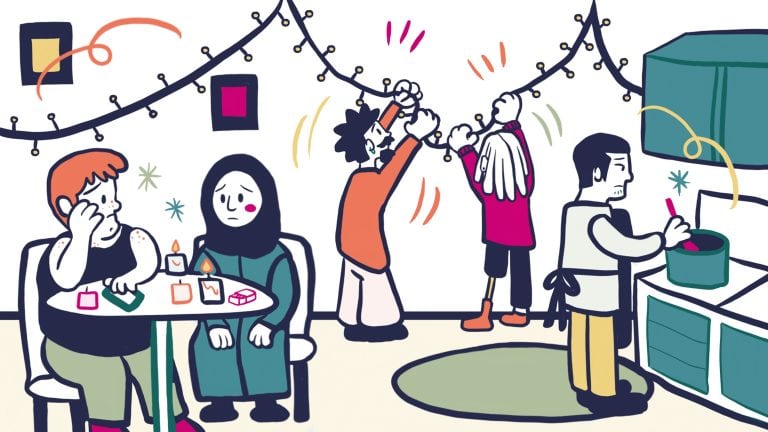
‘If you’re comfortable making meals, you could get involved in that way because there’s value in that for us too. In preparing food and giving it to others, you’re participating in Ramadan. Young people could sit with the evening meal, having a snack or some of their meal if they’re not eating the same as their family members, working out the practical details with their treatment team if they need to.’
Dr Naseem
Build a support network
If you’re not fasting this year, it’s still important for you to have people you can talk to throughout Ramadan.
You might need space to discuss feelings that come up, for example, if you feel sad about not being able to fast, or frustrated at other people’s responses. Trusted adults can also encourage you to take care of yourself and help you find solutions to problems (for example, if you feel unsure about eating at school during Ramadan). And they can support you to take part in Ramadan in other ways that aren’t about food.
‘You shouldn’t feel shameful about it, or that you can’t discuss it. Reach out for help. Having someone you can trust is important.’
Fareeha Jay
Know it’s not your fault if some people don’t understand
Some people come across challenges when others in the Muslim community don’t understand that some people participate in Ramadan without fasting because of mental ill-health.
It is not your fault if people don’t understand mental health. Your decision not to fast is personal, and you do not have to explain it to everyone – especially if they’re not well-informed about mental health.
‘The thing is, Ramadan is a religious obligation – but we’ve turned it into a cultural pressure. Religion is something between you and God, but when culture comes in between it puts extra stress on a person.’
Fareeha Jay
Have hope for recovery
If you’re not able to fast this year, it can be challenging, and you might feel disappointed – but it can be helpful to remember that recovery is possible. For some people, wanting to be able to fast during future Ramadans motivates them to commit to recovery, for example, by engaging in talking therapy or taking their medication regularly.
‘It can be a motivation to get well when you’re not well. You can do the work of recovery with the intention that, in the future, you would love to be healthy enough to fast. The work of recovery is like an investment.’
Dr Naseem
If you decide you will fast this year
If you’re physically and mentally well enough to fast (and are confident your intentions are healthy) there are some things you can think about with the people who support you in your recovery to set you up for success.
Make a plan for coping with fasting
Fasting is not supposed to be easy, but people who have struggled with their mental health might find it brings additional challenges.
It’s a good idea to plan how you’ll cope if things feel difficult. This might include asking trusted adults to be around to support you, or making a box full of helpful items you can use to help you feel calm or distracted.
Some people try ‘practice’ fasts in the run up to Ramadan, including fasting for shorter periods of time (or in winter, when the days are shorter). This means they can see how things go and ‘check in’ with how fasting felt for them.
‘After fasting you can ask: what thoughts or feelings come up? Are there potential triggers? What’s it like to eat in this way? Review and reflect on what went well and what might you need to refine or have more support around.’
Dr Naseem
Make a plan for Iftar and Suhoor
It’s crucial that anyone who fasts does not miss Iftar or Suhoor – even as Ramadan continues and it’s tempting to sleep through Suhoor!
Iftar and Suhoor are different to typical day-to-day eating occasions outside of Ramadan, so it can be helpful to have plan for what to expect and to talk to the adults who are supporting you about managing any challenges.
Some people in eating disorder recovery find being full challenging, for example, but feeling full is a really normal part of Iftar, so they might make a plan in advance to help them cope. Lots of people find it helpful to divide Iftar into two courses.
‘The first course is light – as soon as you break the fast with a date, have some water, a smoothie, soup, fruit, or yoghurt. Then take a break before you go with the second course. The reason for this gap is that it gives your body time to digest. It will understand that you’ve broken the fast and that food is slowly coming in. Then the second course can just be the meal, with regular foods that give you energy: starchy carbohydrates, protein, healthy fats, vegetables.’
Fareeha Jay
Find more practical dietetic advice for Ramadan from Fareeha on Dr Naseem’s website, where you can download a PDF guide about Ramadan and participating if you have experience of an eating disorder.
Build a support network
If you’re fasting this year, it’s important to have people you can trust to help you throughout the month. They can help you follow through with any plans you make to cope with difficult thoughts and feelings, and encourage you to make sure you’re eating enough to sustain you during the hours that you fast.
‘Before Ramadan starts, you must have at least one trustworthy person – a friend or family member – who’s there with you to support you during and after mealtimes.’
Fareeha Jay
Check in through the month
Making a decision to fast during Ramadan is just the start – it’s important to check in on how things are going throughout the month too. Young people who are receiving professional support (like from a counsellor, therapist, or team in an eating disorder service) might set up ‘reviews’ where everyone agrees they’ll talk about how fasting is going – this often includes checking in with your family or the people you live with too. If you have experience of eating problems or an eating disorder, you might talk about things like urges to restrict your eating during Iftar or Suhoor, or whether you have urges to binge. You might also talk about whether ‘eating disorder thoughts’ are getting louder.
‘We’d also monitor weight, because actually you’re not supposed to lose weight in Ramadan. You find that your weight stays quite stable because your body adapts and it’s clever. So keeping an eye on them clinically too.’
Dr Naseem
Depending on how things are going, you might need to change some plans or adapt how you’re doing things. For example, you might need some more support from a trusted adult during Iftar, or you might make sure you’re journalling or expressing your feelings in healthy ways. Some people start to fast during Ramadan and then find it isn’t healthy for them. In these cases, it is OK to change what you’re doing, including stopping fasting and finding other ways to participate in Ramadan instead. This is the healthy and responsible thing to do. If you need to stop fasting because of health reasons, you can also ‘catch up’ and fast the same number of days you’ve ‘missed’ later, outside of Ramadan (if it’s safe and healthy for you to do so).
‘It’s OK to say “we tried, and it’s not for you this year”. It’s your job to take care of your body. You can still participate in Ramadan in other ways.’
Dr Naseem
Know it’s not your fault if some people don't understand
It can be difficult if the people who are supporting your mental health recovery don’t understand Ramadan. This is not your fault. To best support Muslim young people who are struggling with their mental health, people (including those who work in mental health services) need to understand the religious and cultural significance of fasting, and what life is like during Ramadan. It is OK to ask that the adults in your life do their own research into Ramadan to learn more. Fareeha Jay is passionate about the role of Imams in helping mental health professionals and families to understand one another as they support young people during Ramadan.
‘An Imam with an understanding of the condition can make a big difference. I always give the example of Diabetes UK – they have Imams involved with guidance, so why can’t it happen in eating disorder and mental health services?’
Fareeha Jay
Finding more information on mental health, fasting and Ramadan
Together, Dr Naseem and Fareeha Jay are doing all they can to support increased understanding between everyone involved in supporting Muslims with mental health conditions.
It’s crucial that mental health professionals understand the importance of Ramadan so they can support Muslim young people to make the best decision about how they’ll take part.
And it’s also crucial that Imams and other Muslim leaders understand the impact of mental health conditions, to make sure that Muslims who have struggled with their mental health take part in Ramadan in healthy and safe ways.
‘Education is key. We give people the tools to support one another and have these conversations with respect.’
Dr Naseem
If you’re looking for more in-depth information on Ramadan and eating disorders, Dr Naseem has created a downloadable guide, which has advice and meal planning information from Fareeha Jay.
‘I made the guide on the back of feeling like there aren’t resources out there made by a minority who has that understanding. The guide is a fantastic resource for Muslim young people who might want to start a conversation with their family, treatment team, or Imam – as well as for people who want to learn more about celebrating Ramadan while supporting recovery.’
Dr Naseem