
Jump to content on:
What is schizophrenia?
Schizophrenia is a mental health condition where someone experiences episodes of psychosis alongside other symptoms such as feeling disconnected or struggling to look after themselves.
In the past, it was common for people to be diagnosed with schizophrenia after experiencing one episode of psychosis.
Now, people are usually diagnosed if they have repeated episodes of psychosis because we know that, with the right support, people can recover from a first episode of psychosis without developing a long-term mental health condition such as schizophrenia.
Watch: How does schizophrenia...?
Find answers to questions about schizophrenia, including how it develops and how it affects people’s lives.
What is schizoaffective disorder?
Schizoaffective disorder is another mental health condition that people can be diagnosed with. You might get a diagnosis of schizoaffective disorder if you experience psychosis as well as symptoms that affect your mood.
Similarities between conditions
The mood symptoms of schizoaffective disorder are similar to the ones people with bipolar disorder experience – they can include both manic and depressive symptoms. Not everyone with the diagnosis has experiences of both mania and depression.
There’s a lot of overlap between schizophrenia, schizoaffective disorder, and bipolar disorder, so getting the right diagnosis can be complex.
Some people understand the difference between these conditions by thinking of them in three different ways:
- schizophrenia as a condition that involves psychosis and doesn’t come with major mood symptoms
- schizoaffective disorder as a condition that involves psychosis alongside some mood-related symptoms
- bipolar disorder as a condition that affects your mood and can also have some symptoms of psychosis
This can make it simpler to understand but also removes a lot of detail so is a much less accurate way to understand the differences between the diagnoses.
Finding out more
If you have experience of psychosis and you want to know more about these different conditions, or if you’re not sure why you’ve been given a diagnosis, you should talk to your psychiatrist or care team.
What are the symptoms and signs of schizophrenia?
Someone who has schizophrenia will experience psychosis, alongside other things.
Alongside symptoms of psychosis, someone with schizophrenia might:
- not be interested in things
- feel disconnected from their emotions
- find it difficult to concentrate
- want and try to avoid other people
- struggle to look after themselves
Why are the symptoms of schizophrenia called positive and negative?
You might see the symptoms of schizophrenia split into ‘positive’ and ‘negative’ symptoms. This is based on whether they add something to your life or take something away – it doesn’t mean they’re good or bad, or that they’re enjoyable or distressing.
Positive symptoms are things that are added to your life by schizophrenia, like hallucinations and delusions. You would not experience the positive symptoms of schizophrenia if you did not have the condition.
Negative symptoms are things that schizophrenia takes away from your life (or limits), like if it means you find things less enjoyable, have less motivation, or find it difficult to take care of yourself.
How does schizophrenia affect someone’s life?
Severe mental illness
You might hear schizophrenia being called a ‘severe mental illness’.
This means it’s a mental health condition that doesn’t go away and that, for most people, it has a big impact on their ability to live their day-to-day life when it is not well-managed.
Experiencing psychosis
Lots of people find experiencing psychosis (which is one of the symptoms of schizophrenia) really distressing.
They might feel unsafe or scared, and they might find it difficult to trust people or organisations, even if they know them and have trusted them in the past when they’re well. This can affect their relationships with friends and family, especially if they disagree about whether the person is unwell.
But some people have positive experiences of psychosis too.
They might find it comforting to hear the voice of someone they love or find that psychosis is linked to their creativity, for example. This can make it feel more complicated to get treatment and support.
Experiencing psychosis can affect someone’s decision-making too. People might spend money they can’t afford or get into debt or take risks they wouldn’t take when they’re well (for example, having unsafe sex or using drugs).
Schizophrenia tends to involve more than one episode of psychosis (or one very long episode), so these effects can be even more difficult to navigate for people with schizophrenia.
Experiencing psychosis
Learn more about psychosis, including what it is and how it affects people’s lives.

Day-to-day life
Having schizophrenia can also affect day-to-day things like whether people are allowed to drive, as well as making it more difficult (but not impossible) to work or access education.
Other people’s responses
Lots of people with schizophrenia are affected by the attitudes and responses of the people around them.
There’s a lot of stigma around psychosis and schizophrenia, which can be difficult to live with.
There’s a common misunderstanding that schizophrenia is about someone having a ‘split personality’, for example, but this is not true.
Sometimes people might apply their own meanings to your experiences of psychosis – they might think your experiences mean that you’re dangerous, when that isn’t true.
People might also presume that there’s no way to recover from schizophrenia, or that experiencing psychosis means someone won’t be able to live on their own, go to university, or have a job. Again, this isn’t true for everyone.
How do you know if you have schizophrenia?
You can only be diagnosed with schizophrenia by a psychiatrist (a medically qualified doctor who is a specialist in mental health).
How do you see a psychiatrist?
To see a psychiatrist, you usually need to be referred by a GP or someone at your school.
This means that the GP or person at school sends your details on to the service where the psychiatrist works, so they can contact you and offer you an appointment.
In some places, you might be able to self-refer – this means that you can ask for an appointment with the service, for example, by filling in an online form or making a phone call without anyone else (like a GP or teacher) helping you.
Getting NHS mental health support
Find out how you can get help for your mental health through the NHS.
How do psychiatrists diagnose people?
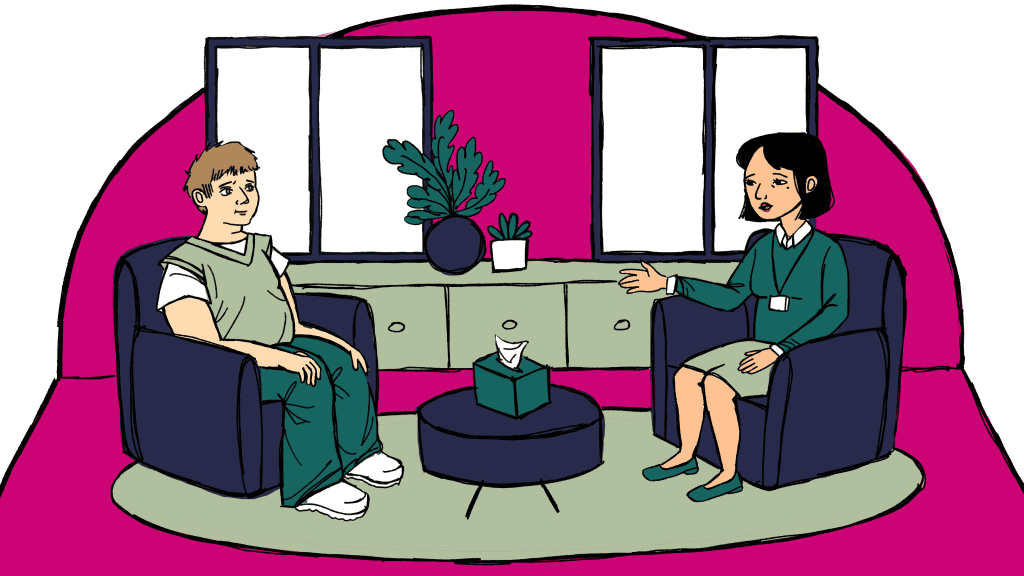
Psychiatrists diagnose people with schizophrenia using diagnostic criteria – specific guidelines about the signs and symptoms that mean someone has schizophrenia, rather than any other mental health condition.
A psychiatrist might do a few different things to find out more about you and your experiences. The exact process is different for everyone, depending on their situation.
You might be asked to fill out some questionnaires, and they might talk to you and see what your behaviour is like. They might also ask your parents or carers how things are at home (and at school or college) at the moment.
Schizophrenia cannot be diagnosed by any sort of blood test or scan, but sometimes people with symptoms of schizophrenia might have blood tests so doctors can check that their symptoms aren’t caused by a physical health condition.
Waiting for a diagnosis
Sometimes, people aren’t given a diagnosis right away because their psychiatrist (and the people they work with) want to wait and see how their symptoms respond to treatment.
For example, if someone is experiencing their first episode of psychosis, it is not always helpful for them to be diagnosed with schizophrenia at this point, because it might be the case that they never experience another episode of psychosis.
What causes schizophrenia?
We do not know exactly what causes schizophrenia. The research that’s been done suggests there might not be one cause, so we think a combination of different things can play a part in someone developing the condition.
Genetics
We know that your genes that you inherit from your biological parents play a part in how likely someone is to develop schizophrenia. The science is complex, and we don’t yet know exactly how genes contribute to someone developing schizophrenia – just that they’re often involved.
Pregnancy and birth complications
Research has shown that people with schizophrenia are more likely to have experienced complications before they were born and during their birth – for example, a premature labour, a low birth weight, or not getting enough oxygen during birth.
Childhood experiences
Going through difficult experiences when you’re a child or young person, and the distress that they cause, might be part of the reason someone develops schizophrenia. People often think of ‘difficult experiences’ as a big, traumatic event. But going through multiple smaller difficult experiences can also have a big impact.
Life events
Almost everyone will experience some things that are stressful or upsetting (like a relationship ending, work stress, or someone they love dying) at some point. For some people, these stressful situations may trigger schizophrenia if they’re already vulnerable to developing the condition.
Drugs
Some people develop symptoms of schizophrenia after using non-prescription drugs, but we don’t know if their drug use causes these symptoms, or if people who develop schizophrenia are just more likely to use drugs. If you have schizophrenia, using drugs like cannabis can make your symptoms worse.
Treatment and looking after yourself if you have schizophrenia
Treatment for schizophrenia can include medication and talking therapies such as cognitive behavioural therapy (CBT).
There isn’t a cure for schizophrenia, but there are different ways you can manage your condition with support from healthcare professionals and the people around you.
There are lots of things you can try to do to help you stay well if you have schizophrenia.
It’s a good idea to make a plan with the people who support you, including:
Things that help your symptoms.
Things can help stop you getting (more) unwell.
Early warning signs that you might be getting (more) unwell.
Things you (and the people around you) can do in response to those early warning signs.
What can help you stay well if you have schizophrenia?
Everyone’s experience of schizophrenia is different, but people often find it is helpful to try to:
- get enough sleep
- eat a balanced diet
- move or exercise regularly
- take their medication as its prescribed, if they’re prescribed medication
- monitor their moods, for example, by using an app
- make time for a hobby or interest they care about
- have strategies to manage stress and stressful situations
- talk to supportive people, for example, friends, family members, teachers, or faith leaders
- speak to their school, college, university, or workplace so they can make adjustments and support them
Never change or stop prescribed treatments without following guidance from your prescriber. If necessary, get advice before you do so.
What might you need to avoid if you have schizophrenia?
Everyone’s experience of schizophrenia is different, but people often find it is helpful to avoid:
- taking recreational drugs – some research suggests they can make symptoms worse and (in some cases) make people in recovery more likely to have a relapse
- drinking alcohol
- smoking
- stress (as much as possible) – for example by reducing how many responsibilities you take on
How to get more help if you have schizophrenia
Emergency?
If anyone is in immediate danger, call 999 now.
If you need urgent help for mental or physical health, call NHS 111 or get help from NHS 111 online.
If you think you may have schizophrenia (or have a diagnosis but are struggling to manage), you should make an appointment with your GP (or the mental health service supporting you, if you’re already accessing mental health care).
You could ask an adult you trust to help you make the appointment or to go with you, if you would find that helpful.
Getting NHS mental health support
Find out how you can get help for your mental health through the NHS.
Text NATTER for help
Anyone can text ‘NATTER’ to 85258 to seek
help, wherever they are in the UK. It’s a free, anonymous service and available 24/7.
More about NATTER

How to help someone else who has schizophrenia
If someone you care about has schizophrenia, it can be difficult to know how to support them. You might be able to offer support in different ways, depending on your own life and your relationship with the person with schizophrenia.
Know when to tell an adult
If you’re worried about someone’s wellbeing, it is always OK to tell a trusted adult like a parent or carer, teacher, or youth worker.
Learn about schizophrenia
If you learn more about schizophrenia, people with schizophrenia don’t have to spend as much time raising awareness. It also means you can better understand what’s going on for them, which can be really helpful if they do something you find difficult, like treating you differently due to a delusion.
Know how to respond to psychosis
If someone’s experiencing a hallucination or delusion, it’s often best to focus on how they’re feeling, rather than the truth or reality surrounding what they’re experiencing. Instead of trying to ‘challenge’ their psychosis, you could offer support to help them cope with how they’re feeling.
Ask how you can help
Schizophrenia is complex and affects people in different ways. Depending on your relationship with someone, you could offer practical support like going with them to appointments or going food shopping or spending time socialising when they feel up to it.
Celebrate the little wins
People with schizophrenia spend a lot of time being reminded of the difficulties they have in navigating the world, so help your friends remember what they’re great at and why you love spending time with them too. Celebrate their success (no matter how small) with them too.
Do normal ‘friend stuff’ too
When someone’s struggling with their mental health, spending time together talking about shared interests (or doing a hobby you both enjoy) can help them feel more like themselves again. This might mean continuing to invite someone to do stuff, even if they’re not always able to say yes.
Stay calm
It’s really helpful if you can stay calm and predictable when someone with schizophrenia is experiencing symptoms. This might mean you need to take a break (like going for a walk) if you start to feel overwhelmed, and that’s OK.
Help them make a plan
When someone with schizophrenia is doing well, it’s important for them to think about a plan for spotting any signs they’re becoming unwell – and what to do to get support as soon as possible. You could help someone to make a plan or remind them about what’s on their plan when needed.
Find more information about supporting others, including how to ask someone if they’re OK, how to listen, and understanding boundaries and responsibility.
There’s also support if you’re a young carer, and tips for looking after yourself while supporting someone else.
Find support
Find trusted services that can support you when things feel overwhelming.