Jump to content on:
What is grief and bereavement?
Bereavement is another way of describing the experiences someone goes through when someone they care about dies. Bereavement can happen after the death of anyone who is important to you – a friend, family member, someone like a teacher or family friend, or a pet.
On this page, we talk about the ‘person’ who’s died to keep it simple, but losing a pet can also be really distressing. Most of the information on this page still applies if you’ve lost a pet and it’s OK to need support (and time) to start to feel OK again.
Grief describes the distress that people can experience when someone they care about dies. It’s often associated with sadness, but often people who are grieving feel a range of different emotions.
Sometimes people talk about grief if they’ve experienced other losses too, like breaking up with their partner, losing their job, or changes to their mental health care. This page focuses on grief following bereavement, when someone has died.
What does grief feel like?
Everyone has their own unique experience of grief. What it’s like depends on lots of factors, like how old they are, the relationship they had with the person who’s died, how the person died, and the support they have around them.
There’s no right or wrong way to feel if you’re experiencing grief. Some people find that their feelings change a lot, and that big emotions catch them by surprise.
If you’re experiencing grief, you might feel:
Overwhelmed
Especially at first, grief can feel chaotic and out of control. You’re often dealing with a lot of emotions as well as coping with changes to your life.
Overwhelmingly sad
You may cry a lot, want to isolate yourself from others, or spend lots of time thinking about your loved one and your memories of them.
Numb
Some people talk about feeling numb and not being able to think clearly. It’s possible that this is because our minds are trying to protect us from pain, and that temporarily feeling numb helps us to process what’s happened in a manageable way.
Exhausted
Coping with lots of feelings can make you really tired, especially if you’re also trying to keep up with day-to-day life or if someone dying makes a big difference to how you normally do things.
Angry
It’s normal to feel angry if you’re grieving. You might feel angry towards whoever’s died, the reason they died (for example, a specific illness or accident), or about someone or something else. You might also just feel angry or irritable in general.
Guilty or regretful
It’s common to regret things you said (or didn’t say), or to feel bad about not being able to stop your loved one from dying – even when it was totally out of your control. Some people also feel guilty about their experience of grief or how they’re coping.
Relieved
Sometimes people feel relieved when someone dies, especially if they were caring for them, if the relationship was difficult, or if they were suffering (or in pain) leading up to their death. This is not unusual – it does not make you a bad person and does not mean that you didn’t love or care about them.
All of these feelings are entirely normal, but knowing that does not necessarily make it any easier to cope.
When someone’s grieving, self-care can also be difficult, for example, if they’re struggling to sleep or if they experience changes in appetite. Grief can also cause physical aches and pains, as well as physical health problems.
Is grief a mental health problem?
In most cases, grief is not a mental health problem. It’s a natural response to something really difficult – and it’s understandable that it makes a big difference to people’s lives.
How long does grief last?
There’s no set timeline for experiencing grief – some people struggle for longer than others, and it’s normal to sometimes find things difficult even a long time after someone’s died (for example, on the anniversary of their death or on their birthday). But most people will start to feel better with time.
When might grief be linked to a mental health problem?
Sometimes, people are diagnosed with a mental health condition if their grief gets harder to cope with over time rather than getting easier to manage, or if they’re still not able to go back to their everyday life (for example, going back to work or education or taking part in hobbies) after a long time. In these cases, they might be diagnosed with prolonged grief disorder or complicated grief.
And sometimes, grief can lead to someone developing a mental health condition like depression, an anxiety disorder, or an eating disorder, or using unhealthy coping methods like self-harm.
How to cope with grief
People find different ways to cope with grief. For most people, things don’t get better straight away – and they may always miss the person who has died and feel sad about their death. With time, though, they can start to find hope and enjoyment in things again. If you’re grieving, there are things you can do to cope:
Talk to someone you trust
Grief can be complex, and it’s often too big for people to manage on their own. Talking through how you’re feeling with a trusted adult can help you feel less alone, and together, you can think about any support you might need to cope, for example, at school or work.
Contact an organisation that supports people with grief
Lots of organisations have helplines or online chats for young people experiencing grief. They’re often run by volunteers who are used to supporting people as they cope with grief, and some people find it helpful to talk to someone they don’t know (or who isn’t also grieving). Some organisations also provide counselling or talking therapy.
Remember the person who’s died in your own ways
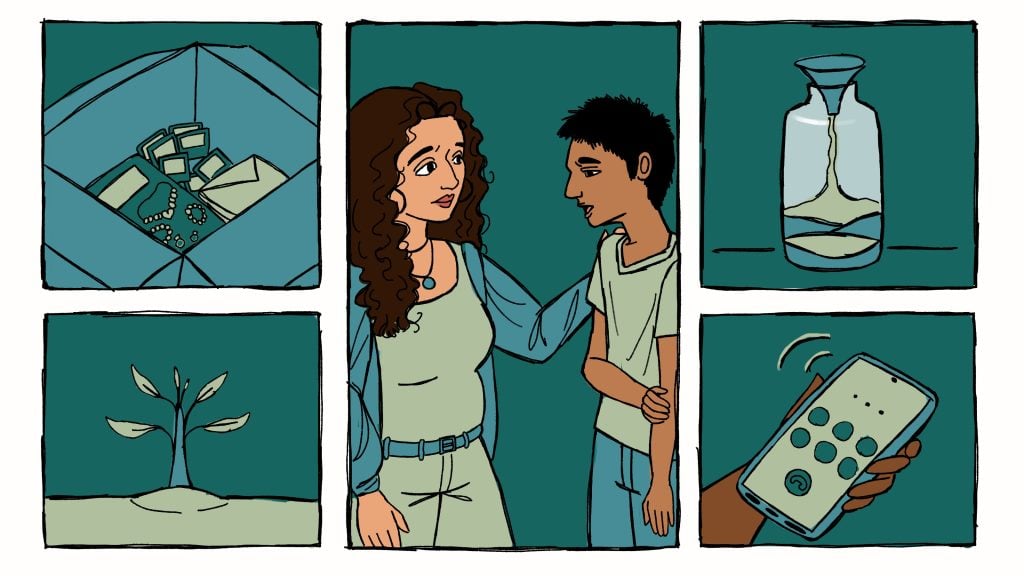
It’s up to you how you remember the person who’s died. Some people might want to make a memory box or do something creative, while others might talk about them or visit a place to remember them. The Nelson’s Journey website has more ideas, as well as templates you can download.
Find ways to express your feelings
Keep track of your mood
Lots of people find it helpful to try to keep track of their mood to make it easier to notice if anything in particular ‘triggers’ difficult feelings or intense experiences of grief, so they can make a plan to cope in these situations.
Focus on basic self-care
Self-care doesn’t have to be luxurious. If you’re grieving, it’s likely to be about things like trying to get a good night’s sleep, making sure you’re eating enough, and making sure you’re not using alcohol or drugs as an unhealthy way of coping.
Try to continue doing things
Doing things you usually enjoy can be helpful when you’re grieving. It’s OK if you need to take a bit of a break, but as soon as you feel able to, it can be helpful to keep up with hobbies, clubs, and activities.
Apps for mental health
Explore trusted apps that can help you feel calmer, manage symptoms, and find support when things feel overwhelming.

How can people struggling with grief get more help?
If you’re struggling to cope with grief, or if grief isn’t getting better with time, the first step is usually to talk to a trusted adult. This can be difficult if the adults in your life are also experiencing grief, but your experiences are important and you deserve support. If you’re worried about talking to someone at home, you could also talk to a teacher or youth worker, for example.
They can talk with you about what’s going on and together, you can make a plan to get support. This might include things like visiting your GP or exploring local services that provide support for young people experiencing grief.
Emergency?
If anyone is in immediate danger, call 999 now.
If you need urgent help for mental or physical health, call NHS 111 or get help from NHS 111 online.
There are also lots of helplines that exist to give young people safe spaces to talk about grief and loss.
‘If you need some more support, if you feel like you can’t handle it by yourself, there are lots of organisations that can guide you through the steps of dealing with bereavement. They can also give your parents or friends techniques that they can use to help you.’
Austin, member of the Nelson’s Journey Youth Panel
Find support
Find trusted services that can support you when things feel overwhelming.

How to support someone else who’s struggling with grief
You can find more information on how to talk to someone who’s struggling, how to listen, and understanding boundaries and responsibility in the ‘Supporting others’ section of the website.
If someone you care about is grieving, it can be difficult to know how to support them, especially because our society isn’t always open about death. As well as being a good friend and including them in the things you do, there are some things you could try to help them.
You don’t need to have the perfect words
It can be difficult to talk about topics like death, especially if someone had a complicated relationship with the person that died – but try not to let worries about saying the ‘wrong’ thing stop you from saying anything at all. You don’t need to know exactly what to say to let someone know that you care.
Find out how they prefer to communicate
You know your loved ones, so you probably already have an idea about how they might want to stay in touch. Some people might want to spend time with people while they’re grieving, while others might find it easier to talk through messages, rather than face-to-face or on the phone.
It’s OK to talk about the person who died
Sometimes, people try to avoid talking about the person who’s died because they’re worried it might make people feel worse, but lots of people find it helpful to talk about what the person was like and share their favourite memories. This is also a way of focusing on their life, and the good times, rather than the end of their life and their death.
Try to be patient
There’s no set timeline for grief and people can feel ready to go back to parts of their day-to-day life at different times. It’s OK to ask people if they want to do things (and to offer to support them if they want to try) but try to be patient if they’re not yet ready.
Be aware of special dates
Grief can be especially challenging on certain dates, even if it’s been a while since someone has died. For example, it can be difficult if everyone else is celebrating Father’s Day or Mother’s Day, or around holidays like Christmas or Eid. You might not remember all of the dates that are important to someone, but checking in to see how they’re doing on special occasions can mean a lot.
Text NATTER for help
Anyone can text ‘NATTER’ to 85258 to seek
help, wherever they are in the UK. It’s a free, anonymous service and available 24/7.
More about NATTER